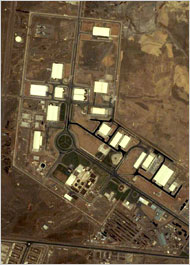
Iran’s nuclear program is one of the most polarizing issues in one of the world’s most volatile regions. While American and European officials believe Tehran is planning to build nuclear weapons, Iran’s leadership says that its goal in developing a nuclear program is to generate electricity without dipping into the oil supply it prefers to sell abroad, and to provide fuel for medical reactors.
But a United Nations report released in November 2011 challenged that claim. The International Atomic Energy Agency released a trove of evidence that they said makes a “credible” case that “Iran has carried out activities relevant to the development of a nuclear device” and that the project may still be under way. The report said the I.A.E.A. had amassed “over a thousand pages” of documents, presumably leaked out of Iran, showing “research, development and testing activities” on a range of technologies that would only be useful in designing a nuclear weapon.
The report offered no estimate of how long it would take for Iran to be able to produce a nuclear weapon. But it laid out the case that Iran had moved far beyond the blackboard to create computer models of nuclear explosions in 2008 and 2009, and conducted experiments on nuclear triggers. The report said that starting in 2000, the Iranians constructed a vessel to conduct those tests, which was not shown to inspectors who visited the site five years later.
The report, the harshest judgment that U.N. weapons inspectors had ever issued in their decade-long struggle to pierce the secrecy surrounding the Iranian program, rekindled a debate among the Western allies and Israel about whether increased diplomatic pressure, sanctions, sabotage or military action could stop Iran’s program.
Efforts to Impose Sanctions
On Nov. 22, the United States and other major Western powers took significant steps to cut Iran off from the international financial system, announcing coordinated sanctions aimed at its central bank and commercial banks. The measures tightened the vise on Iran but fell short of a blanket cutoff. In addition, the United States also imposed sanctions on companies involved in Iran’s nuclear industry, as well as on its petrochemical and oil industries, adding to existing measures that seek to weaken the Iranian government by depriving it of its ability to refine gasoline or invest in its petroleum industry.
ARTICLES ABOUT IRAN'S NUCLEAR PROGRAM
IAEA Nuclear Inspectors to Visit Iran Again in February
Inspectors will return to Iran on Feb. 21, suggesting that some common understanding had been reached regarding the country’s position regarding scrutiny of its nuclear program.
February 1, 2012Iran Calls U.N. Nuclear Team’s Visit ‘Constructive’
The tone of Iran’s message suggested an attempt to seem accommodating amid crushing Western economic sanctions.
January 31, 2012Iran Offers to Extend Inspection by U.N. Team
Iran’s foreign minister was reported on Monday to have offered to extend a three-day visit to his country by United Nations inspectors.
January 30, 2012Behind the Cover Story: Ronen Bergman on Whether Israel Will Attack Iran
A Q&A with Ronen Bergman about his cover story on the possibility of an Israeli attack on Iran in 2012.
January 30, 2012Optimism in Iran Before Nuclear Inspectors Visit
The three-day inspection tour by a team of United Nations nuclear inspectors comes during rising tension over Iran’s nuclear program.
January 29, 2012Iran Says It Could Terminate European Oil Sales Next Week
Escalating retaliatory threats over nuclear sanctions, Iran also advised Arab oil producers that any attempt by them to replace the exports would be considered unfriendly.
January 27, 2012Israelis See Iran’s Threats of Retaliation as Bluff
As Israel’s political and military leaders weigh options to stop Iran’s nuclear program, many are guided by an assessment that an attack is unlikely to set off widespread conflict.
January 26, 2012Bellicose Iran Threatens Cutting Off Oil to Europe
Iran threatened to terminate oil exports to European nations even before their embargo takes effect this summer.
January 26, 2012Our Options for Dealing With Iran
Readers respond to Bill Keller’s column about Iran’s nuclear program.
January 25, 2012
Will Israel Attack Iran?
For the first time since the Iranian nuclear threat emerged in the mid-1990s, at least some of Israel’s most powerful leaders believe that the conditions for an Israeli assault have been met.
January 25, 2012
Iran Sanctions Grow Tighter, but What’s Next?
Officials said a last-ditch effort had only a limited chance of persuading Tehran to abandon what the West feared was a pursuit of nuclear weapons.
January 25, 2012
Iran Faces Tougher Sanctions by European Union and U.S.
The European Union agreed to impose a phased ban on oil purchases from Iran, and the United States expanded its sanctions to include the country’s third-largest bank.
January 24, 2012
Bomb-Bomb-Bomb, Bomb-Bomb-Iran?
It’s an election year, and testosterone is in the air.
January 23, 2012How About Not Bombing Iran?
What might be involved in a deal that removes the specter of a nuclear-armed Iran.
January 23, 2012Confronting Iran in a Year of Elections
Every country involved in the dispute over Iran’s possibly acquiring nuclear weapons is calculating how the American presidential election plays to their agendas.