Dr. Oz Investigates the Hazards of Dental Amalgams
April 16, 2013
Story at-a-glance
- Dental amalgam is composed of about 50 percent mercury, a well-known neurotoxin that can also damage your kidneys
- There is overwhelming evidence showing mercury is easily released in the form of vapor each time you eat, drink, brush your teeth or otherwise stimulate your teeth. These mercury vapors readily pass through your cell membranes, across your blood-brain barrier, and into your central nervous system, where it can cause psychological, neurological, and immunological problems
- Mercury used in dentistry is a significant source of environmental mercury pollution. When you factor in environmental costs and clean-up costs, amalgam is the most expensive dental restoration material in the world
- Once released into the environment, dental mercury converts to methylmercury and contaminates fish, which are the largest dietary source of mercury in the US
By Dr. Mercola
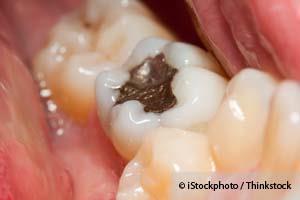
Dental amalgam is a primitive, environmentally polluting product. It is an antiquated remnant from the Civil War era—which is composed of about 50 percent mercury, a well-known neurotoxin.
Aside from the health risks associated with placing mercury into your teeth, there’s also the issue of environmental pollution caused by the dental industry. Once released into the environment, dental mercury converts to methylmercury and contaminates fish, which are the largest dietary source of mercury in the US.
Yet despite the evidence, the American Dental Association (ADA) still remains a staunch advocate of dental amalgams, refusing to acknowledge any inherent problems and risks associated with dental mercury.
The ADA was also among the pro-mercury forces seeking to have dental amalgams exempted from the United Nations Environment Program’s (UNEP) worldwide environmental treaty on mercury.1
Fortunately, earlier this year the scheme failed. On January 19, 2013, more than 140 nations agreed to the treaty, giving birth to “The Minamata Convention on Mercury,”2 which includes worldwide phase-down of dental amalgam to reduce environmental mercury pollution. However, mercury-containing vaccine preservatives were excluded from the treaty.
Thankfully an increasing number of dentists and health professionals have started to take notice and are turning their backs on this archaic practice. According to a survey, 52 percent of American dentists report they are no longer placing amalgams in their patients’ mouths.
Specialists, however, are still far more likely to be using mercury fillings — four out of five still place amalgams. Last year, the New York University College of Dentistry announced that amalgam will no longer be the default restoration material students are taught to use.
Dr. Oz Causes 'Controversy' with Amalgam Segment
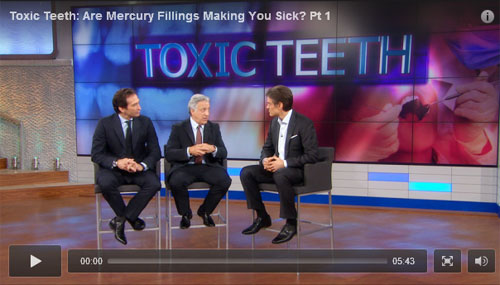
Dr. Oz recently aired a segment about the dangers of dental amalgams,3 which was quickly denounced and attacked by the ADA and “skeptics” alike. In an ADA rebuttal published by the Sacramento Bee, ADA President Dr. Robert Faiella states:4
"As a physician, Dr. Oz missed an opportunity to educate his viewers, and instead focused on conjecture rather than fact.”
And Steven Salzberg, a computer scientist at Johns Hopkins University5 wrote a scathing critique in Forbes,6 in which he accuses Dr. Oz of demonstrating “poor understanding of science,” and being “ignorant of the truth.”
“Why aren’t people dropping like flies from the fillings in their teeth?” he writes. “With little effort, I determined that, contrary to Dr. Oz’s statements, nothing new has been discovered lately about silver tooth fillings. I found studies going back to the 1970s that showed what we’ve long known for decades - that mercury is released from these fillings. But Oz ignores all these.” [Emphasis mine]
What’s fascinating about Salzberg’s attempt at discrediting Dr. Oz for bringing attention to this issue is that he doesn’t actually refute the science at all. As he states above, studies going back to the 70’s show that mercury vapor IS released from amalgam fillings. He simply bashes Dr. Oz’s “overenthusiastic” mannerisms and delivery of the facts.
In this case, he criticizes Dr. Oz for saying that he’s showing the proof of mercury vapor release “for the first time,” which would be technically inaccurate if viewed over the course of history of modern science perhaps, yet accurate if you limit it to Dr. Oz’s show, or perhaps even television. After all, when was the last time you heard or saw anyone demonstrating how mercury vapors are released from dental amalgams on TV?
Salzburg also disagrees with any claims that this mercury vapor may in fact be harmful to your health, although he offers no proof of its harmlessness, aside from the insinuation that since people aren’t dropping dead, how bad could it be?
If you’re wondering the same thing, remember there’s a big difference between acutely lethal toxicity and insidious, disease-producing toxicity that accumulates over time. Just because it doesn’t instantly kill you, does NOT mean it’s harmless!
To perpetuate such an idea is reprehensibly irresponsible, yet this is what’s happening not just with mercury fillings, but also with water fluoridation, pollution, plastic endocrine-disrupting chemicals and other environmental pollutants that collectively take their toll on your health. “Science-based skeptics” keep hammering out the message that avoiding toxic exposures is “controversial,” as if your health and well-being depended on ignoring such advice. When are we going to stop giving them the time of day? How could such a notion possibly BE controversial when you consider that the human body was not designed to run on toxins and man-made chemicals?
Smoking Teeth—Toxic Gas
Salzberg also questions the credentials of David Wentz who performed the mercury vapor demonstration on Dr. Oz’ show. But a similar visual demonstration of this toxic gas release originates from the International Academy of Oral Medicine and Toxicology7 (IAOMT).
The video powerfully demonstrates that if you have amalgam fillings, then every time you eat, chew, visit the dentist or drink hot coffee, mercury vapors are released into your oral cavity, where it can be absorbed into your blood stream. The poisonous vapors are odorless, colorless and tasteless however, so you won't be able to tell that they're there. A single dental amalgam filling may release as much as 15 micrograms of mercury per day. The average individual has eight amalgam fillings and could absorb up to 120 micrograms of mercury per day. In contrast, eating mercury-tainted seafood will expose you to about 2.3 micrograms per day -- and that alone was enough for scientists to call for a worldwide warning8 back in 2006.
The Truth about Mercury Fillings: Disasters for Your Health and the Environment
The mercury used by dentists to manufacture dental amalgam is shipped as a hazardous material to the dental office. Any amalgam leftover is also treated as hazardous and requires special precautions to dispose of, yet it’s supposed to be “safe” to keep it in your mouth for years to come.
Mercury is a potent neurotoxin that can damage your brain, central nervous system and kidneys. Children and fetuses, whose brains are still developing, are most at risk, but really anyone can be affected. Sadly, many live with toxic reactions for extended periods of time, never connecting the dots between their failing health and the mercury in their teeth.
Once someone dies, their amalgam fillings actually pose a risk to the living as well. Emissions from the combustion of mercury fillings during cremation are a significant contaminator of air, waterways, soil, wildlife and food. Seven to nine metric tons of mercury per year escapes into the atmosphere during cremations, and it is estimated that, left unchecked, crematoria will be the largest single cause of mercury pollution by 2020.
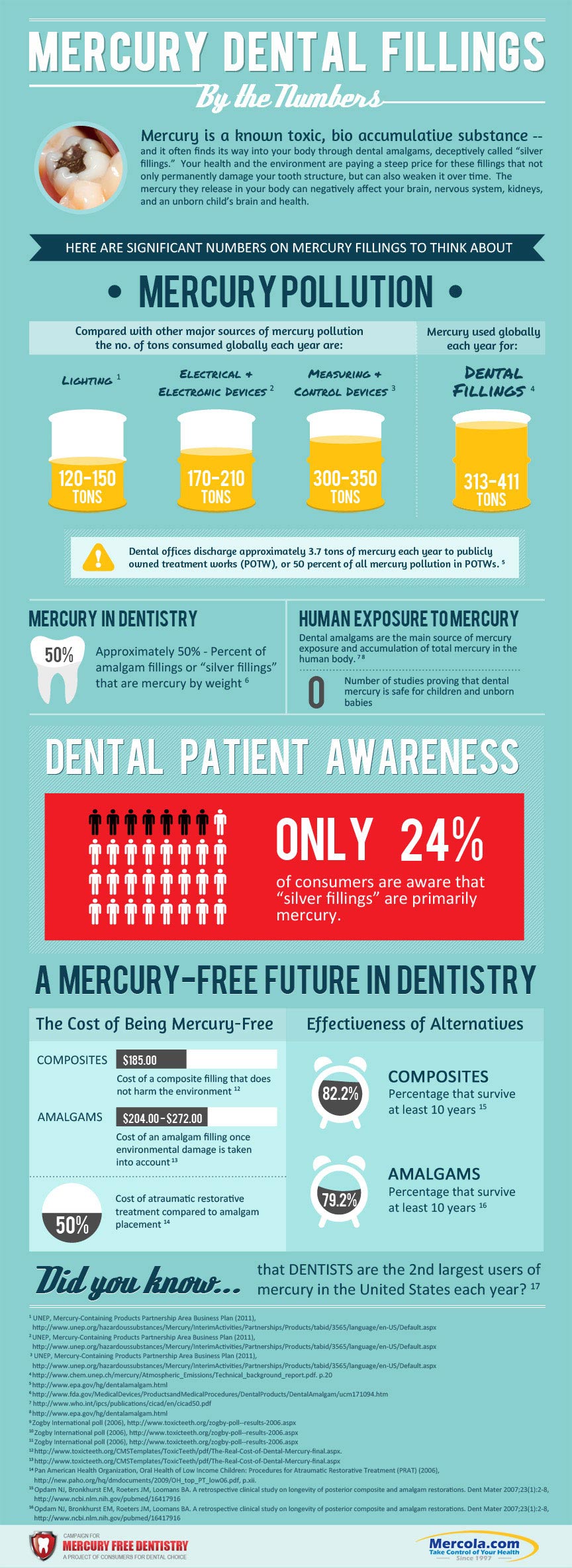
When you factor in environmental costs and clean-up costs, amalgam is actually the MOST EXPENSIVE dental material in the world. It is also the number one cause of mercury exposure for consumers, according to the Canadian government and other sources.
Important Information Regarding Amalgam Removal
For those of you who have mercury fillings, I recommend that you have them removed … but avoid making the mistake I did nearly 20 years ago by having it done by a non-biological dentist. When you have these fillings removed you can be exposed to significant amounts of mercury vapors if the dentist doesn't know what he or she is doing. It's also for this reason that I strongly suggest you get healthy BEFORE having your fillings removed, as you want your detoxification mechanisms optimized prior to removal.
My struggles with my own teeth led me to learn about and embrace biological dentistry, also known as holistic or environmental dentistry. In a nutshell, biological dentistry views your teeth and gums as an integrated part of your entire body, and any medical treatments performed takes this fact into account. The primary aim of holistic dentistry is to resolve your dental problems while working in harmony with the rest of your body.
Biological dentists are well aware of the dangers involved with toxic materials such as mercury fillings (aka amalgams). Some things that need to be done to keep you (and your dentist) safe during amalgam removal include:
- Providing you with an alternative air source and instructing you not to breathe through your mouth
- Using a cold-water spray to minimize mercury vapors
- Putting a rubber dam in your mouth so you don't swallow or inhale any toxins
- Using a high-volume evacuator near the tooth at all times to evacuate the mercury vapor
- Washing your mouth out immediately after the fillings have been removed (the dentist should also change gloves after the removal)
- Immediately cleaning your protective wear and face once the fillings are removed
- Using room air purifiers
How to Find a Qualified Biological Dentist
Knowledgeable biological dentists can be hard to come by, so start your search by asking a friend, relative, neighbor, or inquire at your local health food store. The following links can also help you to find a mercury-free, biological dentist:
- Consumers for Dental Choice
- International Academy of Biological Dentistry & Medicine (IABDM)
- Dental Amalgam Mercury Solutions (DAMS). E-mail them at: dams@usfamily.net or call 651-644-4572 for an information packet
- Huggins Applied Healing. You’ll need to fill out a form and they will connect with you to find a suitable dentist in your area
- Holistic Dental Association
- International Association of Mercury Safe Dentists
What Types of Alternative are There?
One of the most popular alternatives to amalgam is resin composite, which is made of a type of plastic reinforced with powdered glass. It is already common throughout the United States and the rest of the developed world, offering notable improvements over amalgam, as it:
- Is environmentally safe: Composite, which contains no mercury, does not pollute the environment. This saves taxpayers from paying the costs of cleaning up dental mercury pollution in our water, air, and land – and the costs of health problems associated with mercury pollution.
- Preserves healthy tooth structure, because, unlike amalgam, it does not require the removal of significant amounts of healthy tooth matter. Over the long term, composite preserves healthy tooth structure and actually strengthens teeth, leading to better oral health and less extensive dental work over the long-term.
- Is long-lasting: While some claim that amalgam fillings last longer than composite fillings, the science reveals this claim to be baseless. The latest studies show that composite not only lasts as long as amalgam, but actually has a higher overall survival rate.
A lesser-known alternative is increasingly making mercury-free dentistry possible even in the rural areas of developing countries. Atraumatic restorative treatment (also called alternative restorative treatment or ART) is a mercury-free restorative technique that has been demonstrated a success in a diverse array of countries around the world, including Tanzania, India, Brazil, Zimbabwe, Turkey, South Africa, Thailand, Canada, Panama, Ecuador, Syria, Hong Kong, Mexico, Sri Lanka, Chile, Nigeria, China, Uruguay, Peru, and the United States. ART relies on adhesive materials for the filling (instead of mercury) and uses only hand instruments to place the filling, making it particularly well-suited for rural areas of developing countries.
Global Consensus Reached on Mercury Pollution
There’s now a global consensus that so-called “silver” fillings contribute to environmental mercury pollution, and the UN treaty calling for worldwide phase-down of amalgam to protect the environment is a good start, seeing how significant of a problem it is. According to EPA estimates from 2010, about 50 percent of the mercury entering municipal wastewater treatment plants (about 3.7 tons each year) can be traced back to dental amalgam waste. An estimated 90 percent is captured by the treatment plants.9 The rest ends up in sewage sludge—some of which ends up in landfills, while other portions are incinerated (thereby polluting the air) or applied as agricultural fertilizer (polluting your food), or seep into waterways (polluting fish and wildlife).
But we also need to recognize the hazard mercury amalgam poses to human health when used in dentistry. Small steps are being taken, but much more still needs to be done. As reported by the Chicago Tribune10:
“Two large, nonprofit Catholic hospital chains are waging proxy battles with the two leading American makers of dental amalgam. The hospital chains' investment arms are seeking a shareholder vote that would mandate each company detail plans to phase out mercury.”
It's high time that the US Food and Drug Administration (FDA) and the dental schools in charge of educating young dentists start acknowledging the dangers of mercury fillings and at least protect those most vulnerable to damage from mercury fillings -- children and pregnant women. There is overwhelming evidence showing mercury is easily released in the form of vapor each time you eat, drink, brush your teeth or otherwise stimulate your teeth. These mercury vapors readily pass through your cell membranes, across your blood-brain barrier, and into your central nervous system, where they can cause psychological, neurological, and immunological problems.
Embed this infographic on your website:
Click on the code area and press CTRL + C (for Windows) / CMD + C (for Macintosh) to copy the code.
Please Help Hold FDA Accountable
On September 22, 2011, Dr. Jeff Shuren, Director of the Center for Devices & Radiological Health (the branch of the FDA responsible for the approval and safety of all medical devices) promised to make an announcement on amalgam by the end of 2011. When questioned by a reporter at a major newspaper, the FDA repeated that it would act in 2011. As 2011 came to a close, the suspense grew as everyone speculated whether FDA would finally act, to protect the health of American children. With just six minutes left in the work year, at 4:54 pm on Friday, December 30, FDA conceded that no announcement was forthcoming – not in 2011, and maybe not at all.
As of today, April 16, 2013, the FDA’s announcement is 472 days overdue, and counting...
The FDA’s door is always open to the drug companies seeking quick approval of its latest and greatest drug, but the agency is now in its second year of violating its own deadline to act on amalgam. In a call to action, The Campaign for Mercury Free Dentistry writes11:
“As confirmed by the mercury treaty talks, dental amalgam is beyond a doubt a hazard in our environment; that is why so many government officials on every continent are dedicated to phasing down – and ultimately phasing out – its use. But FDA failed to consider the environmental health threat posed by this mercury product in its 2009 dental amalgam rule.
Not only that, but FDA failed to address the problem of amalgam use in children – even though its own hand-picked advisory panel on dental amalgam raised this concern again and again during its 2010 meeting. The scientists on that panel told FDA there is “no place for mercury in children”…. recommended that in “children less than 6 years of age, I would restrict it significantly”…. insisted that amalgam did not belong in “pregnant women and definitely not in those below 6 years of age”…. and asked FDA, “why put amalgams in children if we know they're going to live with that for the rest of their lives? And we don't know what that's going to do.”
In fact, not a single scientist on FDA’s advisory panel agreed with FDA's 2009 rule that promoted unrestricted amalgam use in children and pregnant women. Director Shuren himself has acknowledged the FDA panel’s conclusion: "Now, the panel did …point out that there may be certain populations who are more sensitive to dental amalgam, like young children and pregnant women."
So why doesn’t FDA protect those young children and pregnant women from this unnecessary source of mercury exposure?”
How You Can Help
Dr. Oz spoke out about mercury fillings—now it’s your turn! It's high time for the FDA start acting on the science and get on the bandwagon to protect the health of children and pregnant women across the US. Your voice is needed in order to bring about permanent change in the fight for mercury-free dentistry. The FDA reneged on their stated intent to address dental amalgam by the end of 2011. We now need you to urge the FDA to heed the advice of its own scientists, convened in December 2010. To voice your opinion, please contact Dr. Shuren. This time, we think it best if you telephone or fax him, and make your message more direct, rather than emailing.
- EMAIL FDA Director Shuren at Jeff.Shuren@fda.hhs.gov or
- CALL him at 301-796-5900 or
- FAX him at 301-847-8510 or
- MAIL a letter to Director Jeff Shuren, CDRH, Building WO66, Room 5442, U.S. Food and Drug Admin., 10903 New Hampshire Ave. Silver Spring, MD 20993
Phone calls and faxes are especially important because Dr. Shuren cannot ignore them – keep calling and leaving messages until you get answers! Ask Dr. Shuren:
- The FDA panel on dental amalgam that met in 2010 recommended against using dental amalgam in young children and pregnant women. What are you doing to protect young children and pregnant women from dental amalgam?
- Other nations like Canada, Australia, the United Kingdom, Sweden, and Denmark have taken steps to protect children and pregnant women from dental amalgam. Why is the U.S. so far behind other nations?
- You said FDA would make an announcement on dental amalgam by December 31, 2011. We have waited patiently for more than 450 days, but it is now 2013. When is FDA going to start protecting our children from dental mercury?
472 days of FDA silence is enough. With your help, we can show our government that the public will not rest until FDA is at least protecting our children from dental mercury.
© Copyright 1997-2013 Dr. Joseph Mercola. All Rights Reserved.
http://articles.mercola.com/sites/articles/archive/2013/04/16/dr-oz-amalgam-segment.aspx