June 17, 2013 - A new subduction zone forming off the coast of Portugal heralds the beginning of a cycle thatwill see the Atlantic Ocean close as continental Europe moves closer to America.
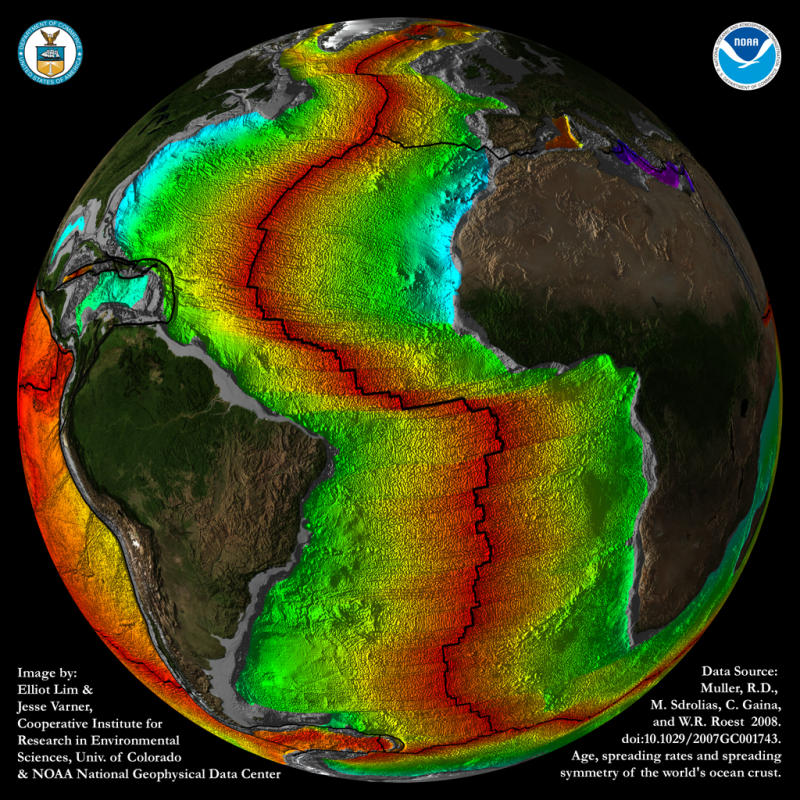
Published in Geology, new research led by Monash University geologists has detected the first evidence That A passive margin in the Atlantic ocean is becoming active. Subduction zones, zoals the one beginning near Iberia, are one of the areas where tectonic plates That cover Earth's surface dives beneath another plate into the mantle - the layer just below the crust.
Lead author Dr. João Duarte, from the School of Geosciences said the team mapped the ocean floor and found it was beginning to fracture, indicating tectonic activity around the apparently passive Southwest Iberia plate margin.
"What we have detected is the very beginnings of an active margin - it's like an embryonic subduction zone," Dr. Duarte said.
"Significant earthquake activity, Including the 1755 quake Which devastated Lisbon, Indicated thatthere might be convergent tectonic movement in the area. For the first time, we have've been able to providence not only evidences thatthis is indeed the case, but usefull consistent driving mechanism. "
The incipient subduction in the Iberian zone could signal the start of a new phase of the Wilson Cycle - where plate movements supercontinents break up, like Pangaea, and open oceans, stabilize and then form new subduction zones close Which the oceans and bring the scattered continents back together.
This break-up and reformation of supercontinents has happened at least three times, on more than four billion years, on Earth. The Iberian subduction will Gradually pull Iberia towards the United States over Approximately 220 million years.
The findings providence a unique opportunity to observe a passive margin becoming active - a process thatwill take around 20 million years. Even at this early phase the site will yield data thats Crucial to refining the geodynamic models.
"Understanding thesis processes will certainly providence new insights on how subduction zones May have initiated in the past and how oceans start to close," Dr. Duarte said.
Copyright 2013 by Science Daily, LLC
http://translate.google.com/translate?act=url&depth=1&hl=nl&ie=UTF8&prev=_t&rurl=translate.google.nl&sl=nl&tl=en&u=http://www.sciencedaily.com/releases/2013/06/130617104614.htm