How to Grow Your Own Food in Small Spaces
May 23, 2013
Story at-a-glance
- Anyone, regardless of space allowance, can produce their own food. Sprouts are one ideal option. A powerhouse of nutrition, sprouts can contain up to 30 times the nutrition of organic vegetables grown in your own garden, and allow your body to extract more vitamins, minerals, amino acids and essential fats from the foods you eat
- In areas where the growing season is short, growing seedlings will allow you to harvest your vegetables four to six weeks earlier than had you planted the seeds directly outdoors
- You can use virtually every square foot of your space, including your lateral space. Hanging baskets are ideal for a wide variety of foods, such as strawberries, leafy greens, runner beans, pea shoots, tomatoes, and a variety of herbs. And instead of flowers, window boxes can hold herbs, greens, radishes, scallions, bush beans, strawberries, chard, and chiles
By Dr. Mercola
You probably know already that organic foods are good for you. The major problem most people have with organic food is the expense. However, there are several different ways to radically reduce the cost of your food.
Growing your own is probably one of the best, and can be extremely satisfying. I am convinced that growing sprouts is more practical and useful for most people and takes less space and time but it will be a bit longer before I am able to provide a comprehensive article on how to do that.
In the meantime anyone, regardless of space allowance, can also produce their own food. If you have a back yard, you’re blessed indeed. But apartment dwellers can also grow fresh produce. Alex Mitchell’s book The Edible Balcony is an excellent resource.
One of the major benefits of growing your own food is that you have complete control over the end product, from soil composition to chemical exposure.
Whereas a conventionally-grown garden might include the use of chemical fertilizers and potentially toxic insecticides to protect the crop, an organic gardener will forgo the chemicals and feed the soil with natural fertilizers and insect barriers.
The same goes for weed control. While a traditional gardener may apply synthetic herbicides to control weeds, an organic gardener, just like an organic farmer, will use hand weeding and cover crops with mulches to control weeds. For every toxic solution, there’s usually an equally effective non-toxic alternative.
Growing Seedlings Can Give You a Head Start on the Season
While you can certainly wait until the danger of spring frost has passed, and then plant your seeds directly in the soil outdoors, you can get a head start by growing seedlings and then transplanting them into your garden. This can be particularly useful in areas where the growing season is short.
Growing seedlings, which can take between four and 12 weeks to sprout, will allow you to harvest your vegetables four to six weeks earlier than had you planted the seeds directly outdoors.
The University of Maine1 has an excellent web site describing how to grow your seedlings, and which ones are best left for direct-seeding due to their rapid maturation:
“Using transplants instead of direct-seeding is especially important for plants that take a long time to mature or are sensitive to frost, such as tomatoes, peppers, eggplants, and melons.
Some plants (mostly root crops) do not transplant well, or they mature quickly enough that starting seedlings indoors is not necessary. Vegetables that are typically direct-seeded in the garden include beans, beets, carrots, corn, peas, spinach, turnips, and zucchini.”
To get started on your seedlings, you need just a few supplies:
- Fresh seed, ideally heirloom
- Containers, about 2 to 3 1/2-inch deep with adequate drainage holes
- Growing medium. Use fine-textured soilless mix of equal parts of peat moss and vermiculite or perlite. Do not use conventional fertilizers
Now, once your seedlings are grown and the outdoor temperature is 45 degrees Fahrenheit or warmer, the plant will require one to two weeks of “hardening off” before they can be transplanted into the ground, to prevent them from going into shock. This is done by placing them outdoors for just a few hours at a time in a semi-shaded location.
Gradually, over several days, increase the time you leave them outdoors, and gradually increase the amount of direct sunlight they’re exposed to. Transplant your seedlings into your garden in the late afternoon, as the weather starts to cool down (or choose a cloudy day), and water the plants thoroughly. For detailed step-by-step instructions, see the University of Maine’s seedling page2.
The Edible Balcony
In her book The Edible Balcony, Alex Mitchell details how to grow fresh produce in small spaces. Filled with beautiful color photographs throughout, the book helps you determine what might work best for you, depending on your space and location, and guides you through the design basics of a bountiful small-space garden. For example, those who live in a high-rise apartment will undoubtedly have to content with more wind than those who live on the bottom floor. There are solutions for virtually every problem, and in this case, wind-tolerant plants can be used, or you could construct some sort of protective screening.
You can use virtually every square foot of your space, including your lateral space. Hanging baskets are ideal for a wide variety of foods, such as strawberries, leafy greens, runner beans, pea shoots, tomatoes, and a variety of herbs. And instead of flowers, window boxes can hold herbs, greens, radishes, scallions, bush beans, strawberries, chard, and chiles, for example.
While you will obviously need to use pots if you don’t have a garden plot, avoid using many small pots. The smaller the pot, the faster it will dry out. Instead, opt for large yet lightweight containers. You may also want to consider self-watering pots, which will reduce the time you have to spend watering. (You could even make your own. Mitchell shows you how in her book.)
Another excellent tip for the time-pressed gardener is to install a timer to your outside tap, and have a plastic dripping tube connected to the tap. Position one tube over each pot to be watered. Then all you have to do is set the timer to water your plants twice a day for five or ten minutes. Adding a top layer of mulch will also reduce the amount of watering a plant will need. For smaller containers, mix in a handful of water-retaining crystals or gel, as these will help retain moisture. Mitchell’s book contains creative solutions to take advantage of every nook and cranny, and recycle common household items for your garden. Such tips include:
- Attaching horizontal rows of gutters on a wall, which can hold your leafy greens and herbs
- A hanging bottle herb garden, using discarded plastic bottles
- Two or more stacked tires with a plastic bag to hold the soil can make for an excellent planter for plants that like warm soil, such as sweet potatoes and basil
Another excellent tip is provided in Mitchell’s book: An ancient technique called “3 sisters,” used by the Native American Indians, involves planting specific combinations of plants together, as the plants support each other. For example:
“Corn provides something for the beans to climb up, while they in turn add nitrogen to the soil. This benefits the corn and squash, and the latter helpfully shades the roots of the other plants, protecting them from the drying effects of the sun.”
What Kind of Soil Should You Use for Your Potted Garden?
Quality produce begins with healthy soil. This is because the nutrition your plants require is derived from beneficial microorganisms in the soil. These organisms take the mineral material that’s in your soil and convert it into a plant-available form. Without these bioorganisms, your plants cannot get the nutrients they need. According to Mitchell:
“When you first plant anything, you need to buy potting mix. The one you buy depends on what you are growing: annual vegetables, fruit, and flowers are happy with one that is general, soilless, organic and peat-free; acid-loving crops such as blueberries need lime-free compost; while fruit trees and bushes, which will live for many years, will benefit from a soil-based potting mix, which releases its nutrients slowly.”
If you have enough space to create your own compost, I highly recommend picking up Dr. Elaine Ingham’s book, 10 Steps to Gardening with Nature. Dr. Ingham3 is chief research scientist at Rodale Institute, and is an internationally recognized expert on the benefits of sustainable soil science. Her book explains the mechanisms behind how the beneficial microorganisms in the soil benefit your plants, and how to create compost that support your chosen crops. You can also find valuable information and resources on soil health and composting on the Rodale Institute’s website.4
Besides composting, setting up a little worm farm can also help you restore soil health naturally, eliminating the need for synthetic fertilizers. In addition to helping create a valuable compost to help plants grow, worms have also been singled out for their ability to break down toxins like cadmium, lead and other heavy metals, helping to detoxify soil. They do this by optimizing the bacterial content of the soil. Worms also can even break down cardboard waste fibers, making them a potential recycling tool.
While we’re touching on larger-scale gardens, it may be useful to know that shrubs and trees require two-and-a-half to four times less water than a lawn. Amazingly, a typical suburban lawn uses an estimated 10,000 gallons of water each season, above what’s provided by rainfall. So planting an edible garden can kill several birds with one stone; not only can you reduce your food bill while eating the freshest food imaginable, your garden can also reduce your outdoor water usage. To learn more about water conservation, see Audubon’s water conservation page.5
Keeping Weeds and Pests at Bay
Another important aspect of growing your own food is the ability to avoid chemical exposure. American homeowners apply an estimated 78 million pounds of insecticides, herbicides, and fungicides per year to their homes, lawns, and gardens.6 The problem is that these toxic chemicals are toxic not just to the weeds or critters they’re designed to kill. They’re also toxic to beneficial insects, birds, wild animals, pets, young children, and anyone who eats foods to which these toxins have been applied. According to Audubon:7
“In a recent study of pesticide exposure among children living in a major U.S. metropolitan area, traces of garden chemicals were found in 99 percent of the 110 children tested.”
The Environmental Protection Agency (EPA) considers 60 percent of herbicides, 90 percent of fungicides, and 30 percent of insecticides to be carcinogenic. Pesticides (used to kill insects) are also notoriously hazardous. Commonly used pesticides have been linked to health problems such as:
Neurotoxicity Endocrine system disruption Cancer Immune system suppression Male infertility and reduced reproductive function Miscarriages
Fortunately, there are safe and effective natural alternatives for virtually every pest problem you come across. For instance, for a homemade garden spray that will discourage most pests, use some mashed garlic paste combined with a little cayenne pepper or horseradish. Add a small amount to a gallon jug of water and let it sit for a day or two, shaking it occasionally. Just spray a small amount onto a few leaves first to make sure it's not so strong that it will burn them.
For more details on these types of natural solutions to pests of all kinds, I recommend the book Dead Snails Leave No Trails by Nancarrow and Taylor, or visit the website BeyondPesticides.org.8 They have a section on do-it-yourself natural solutions9 to a wide range of pest problems along with a resource to find pest management companies that use non-toxic products.10 Mitchell’s book also has a section on how to address a wide variety of specific plant pests.
Sprouts—One of the Most Nutrient Dense Foods, Ideal for Small Spaces
Sprouts are an authentic “super” food that many overlook or have long stopped using. In addition to their superior nutritional profile, sprouts are really easy to grow if you’re an apartment dweller, as they don’t require an outdoor garden.
A powerhouse of nutrition, sprouts can contain up to 30 times the nutrition of organic vegetables grown in your own garden, and allow your body to extract more vitamins, minerals, amino acids and essential fats from the foods you eat. During sprouting, minerals, such as calcium and magnesium, bind to protein, making them more bioavailable. Furthermore, both the quality of the protein and the fiber content of beans, nuts, seeds and grains improves when sprouted. The content of vitamins and essential fatty acids also increase dramatically during the sprouting process.
Sunflower seed and pea sprouts tend to top the list of all the seeds that you can sprout and are typically each about 30 times more nutritious than organic vegetables. While you can sprout a variety of different beans, nuts, seeds and grains, sprouts in general have the following beneficial attributes:
- Support for cell regeneration
- Powerful sources of antioxidants, minerals, vitamins and enzymes that protect against free radical damage
- Alkalinizing effect on your body, which is thought to protect against disease, including cancer (as many tumors are acidic)
- Abundantly rich in oxygen, which can also help protect against abnormal cell growth, viruses and bacteria that cannot survive in an oxygen-rich environment
Planting and Harvesting Sprouts at Home
I used to grow sprouts in Ball jars over 10 years ago but stopped doing that. I am strongly convinced that actually growing them in soil is far easier and produces far more nutritious and abundant food. It is also less time consuming. With Ball jars you need to rinse them several times a day to prevent mold growth. Trays also take up less space. I am now consuming one whole tray you see below every 2-3 days and to produce that much food with Ball jars I would need dozens of jars. I simply don't have the time or patience for that.
I am in the process of compiling more specific detailed videos for future articles but I thought I would whet your appetite and give you a preview with the photos below. For now you can get instructions on how to grow them by viewing a step-by-step guide at rawfoods-livingfoods.com.11

About to plant wheat grass and sunflower seeds - 2 days after soaking

Wheat grass and sunflower seeds – 3 ½ days post germination
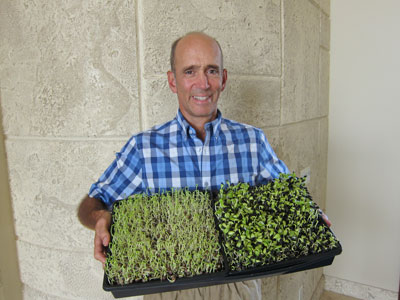
Sunflower seeds and pea sprouts – 3 days until ready for harvest
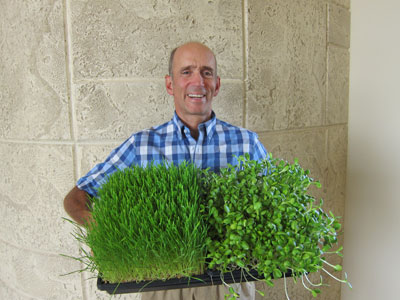
Sunflower seed sprouts and wheat grass - ready to harvest
My two favorites are sunflower sprouts and pea. They provide some of the highest quality protein you can eat. Sprouted sunflower seeds also contain plenty of iron and chlorophyll, the latter of which will help detoxify your blood and liver. Of the seeds, sunflower seeds are among the best in terms of overall nutritional value, and sprouting them will augment their nutrient content by as much as 300 to 1,200 percent! Similarly, sprouting peas will improve the bioavailability of zinc and magnesium.
I have been sprouting them now for a few months and they have radically improved the nutrition of my primary meal, which is a comprehensive salad at lunch. They are a perfect complement to the fermented vegetables. My current salad consists of about half a pound of sunflower sprouts, four ounces of fermented vegetables, half a large red pepper, several tablespoon of raw organic butter, some red onion, a whole avocado and about three ounces of salmon or chicken. It is my primary meal. In the late afternoon, I typically only have macadamia nuts and coconut candy in addition to drinking 16-32 ounces of green vegetable juice. I break it up occasionally by going to a restaurant with friends.
Ready, Set, Garden!
With benefits ranging from fresher, uncontaminated food and cutting your grocery bill, to beautifying your community and educating the next generation, there’s really nothing holding anyone back from creating an edible garden—even if all you have is a couple of window sills or a small balcony. There are tons of creative solutions that will allow you to make the most of even the tiniest space.
Sprouts is one of my favorite tight-space crops, simply because you get so much for so little time, money and effort. It’s hard to find a food that will provide you with so much nutrition. So try it out! Start small, and as you get the hang of it, add another container of something else. Before you know it, large portions of your meals could come straight from your own edible garden.
You want to also make sure you are using only the finest seeds when starting your garden. Picking the types of seeds can go a long way in helping your garden be plentiful and even determines how juicy or hardy your vegetables are. Heirloom seeds are seeds that have been carefully cultivated to produce the best plants possible; they're hardy and bountiful. You can find packages containing 26 of the popular heirloom seeds in my Heirloom Variety Seed Collection, available in my online store.
© Copyright 1997-2013 Dr. Joseph Mercola. All Rights Reserved.
http://articles.mercola.com/sites/articles/archive/2013/05/23/edible-garden.aspx