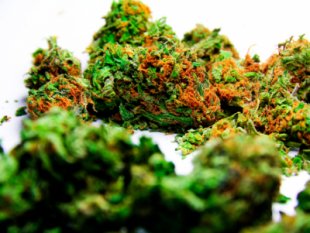
Photo Credit: Shutterstock.com/Atomazul
November 6, 2013
Election Night 2013 featured four proposals concerning municipal
legalization of marijuana and one statewide recreational tax
initiative. In every case, the marijuana measures won handily.
Colorado: Voters passed Proposition AA by a 65
percent to 35 percent margin. This vote enacted the 15 percent
excise tax on recreational marijuana sales that voters legalized
with Amendment 64 last election, as well as a 10 percent sales tax
not originally included in the amendment.
"Colorado is demonstrating to the rest of the nation that it is
possible to end marijuana prohibition and successfully regulate
marijuana like alcohol," said Mason Tvert, director of
communications for the Marijuana Policy Project, which supported
Proposition AA and was the largest financial backer of the Amendment
64 campaign in 2012. "It is only a matter of time before voters and
lawmakers in other states recognize the benefits and adopt similar
policies."
Opponents claimed AA was a “bait and switch” by adding a new
sales tax and by taxing marijuana at rates far greater than alcohol.
Colorado Legislative Council staff have estimated that
Proposition AA will generate $27.5 million in annual excise tax
revenue and $39.5 million in annual state sales tax revenue. Six
million of that sales tax revenue would be directed back to
localities. The revenue from the new 10 percent state sales tax will
be used to fund the marijuana regulatory structure. This includes
enforcement of laws for the testing, tracking and labeling of retail
marijuana, as well as measures to prevent the diversion of retail
marijuana to individuals under 21 years old.
Maine: Voters in the state's most populated
city, Portland, approved a municipal measure that legalized 2.5
ounces of marijuana for adults over 21 years of age. This vote was
approved by a two-to-one margin (67 percent) and also legalizes
paraphernalia and sharing of marijuana between adults. Victory in
Portland boosts statewide efforts in Maine, which seek to regulate
marijuana like alcohol in 2016.
"Now that marijuana is legal for adults in Maine's largest city,
there is an even greater need for comprehensive reform at the state
level," said David Boyer, Maine political director for the Marijuana
Policy Project, which backed the municipal measure.
Michigan: The cities of Ferndale, Lansing and
Jackson all voted on proposals to decriminalize the possession and
sharing of less than one ounce of marijuana for adults. The votes
approving decrim in those cities were margins of 69 percent, 62
percent and 61 percent support, respectively.
In Maine and Michigan, non-medical marijuana possession still
remains illegal, so these city ordinances would only apply to cases
involving city police officers, who may choose to detain and arrest
adult pot smokers under state law. Even so, municipal marijuana
reforms that get better than 60% support are harbingers of future
marijuana reforms at the state level. Activists have already
targeted Maine for 2016 legalization and these Michigan votes may
accelerate the timetable for that state.
Russ Belville is the host and producer of "The Russ Belville
Show" at RadicalRuss.com.
http://www.alternet.org/drugs/marijuana-wins-big-state-elections?