California Going for the Gold By Digging Deep for Oil

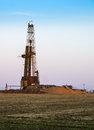
California’s quest to regain its status as the
land of golden opportunity is now, partly, centered
on the allowance of drilling in the Monterey Shale
formation, which holds about 15.4 barrels of
recoverable crude oil. The governor there just
signed a new fracking law that gives producers
access to the region.
Neither the environmentalists nor the oil producers
like the law, which was signed by Governor Jerrry
Brown last week. But the reality is that it does
give developers access to properties where no
fracking was allowed. And while those drillers look
to refine the rules, the green groups are saying
that the measure is too weak. They are insisting on
a moratorium on all drilling.
Brown, who has earned his credentials as a patriot
of the left, has said that California’s economy is
in need of an economic jolt and that the added oil
production could provide that stimulus. Unless the
state outlaws driving, he adds, then it must seek to
develop its own energy sources -- ones that could
put its own citizens to work. The law, furthermore,
could be constructed so that it provides the
essential safeguards, or as he said, in a statement,
“establishes strong environmental protections and
transparency requirements.”
Indeed, the
Monterey Shale, which stretches from Central
California down through Southern California, holds
15.4 billion barrels of recoverable crude oil, says
the U.S. Energy Information Administration. By
comparison, North Dakota’s Bakken Field has 3.6
billion barrels — a place that now has 3 percent
unemployment. Nationally, 25 billion barrels in
proved unconventional shale oil exists.
California has a jobless rate of 8.6 percent. Its
budget deficit has been as high as $26 billion,
although recently approved tax hikes will cut that
way down — a move that could cause some of the
state’s business to relocate. According to a study
done by the University of Southern California,
tapping the Monterey Shale would bring in 2.8
million new jobs while raising an additional $25
billion in new revenues by the end of the decade.
California now produces nearly 10 percent of the
nation’s oil, which is on par with that of Alaska.
And next year, the Monterey Shale formation is open
for business, although producers must gain permits
and notify local communities, while also revealing
the chemicals that they are using to frack. A year
after the law has been in force, independent
scientists will thoroughly evaluate its performance.
The Divide
Unlocking the oil or gas supplies from the rocks
where they are held deep underground requires using
a mixture of water, sand and chemicals. That
process, known as fracking, has been blamed for
polluting drinking water supplies.
Environmentalists have been quick to criticize the
California’s new law, saying that the state should
have followed New York's lead, which has banned
fracking until the science is fully understood.
“As a majority of Californians agree – a moratorium
on fracking is needed until the state has fully
evaluated fracking’s risks,” says Annie Notthoff,
California Advocacy Director for the
Natural Resource Defense Council. “In the
meantime, these new fracking regulations need to be
fixed, which Governor Brown himself acknowledged as
he signed them into law.”
Business groups have a different view. Allowing
greater access to all of those deposits is
necessary, says the
California Chamber of Commerce, adding that it
could result in greater economics benefits.
Nevertheless, the oil industry is complaining that
the law is restrictive with some saying that the
state’s fracking rules are the strongest in the
world.
Nevertheless, “While (the law’s) requirements went
significantly further than the petroleum industry
felt was necessary, we now have an environmental
platform on which California can look toward the
opportunity to responsibly develop the enormous
potential energy resource contained in the Monterey
Shale formation,” says Catherine Reheis-Boyd, with
the
Western States Petroleum Association.
Beyond the job growth and the additional state
revenues, the petroleum lobbyist adds the state’s
gross domestic product will rise no less than an
additional 2.6 percent on a per-person basis.
California is ambivalent. But Governor Brown has
given credence to the pursuit of new wealth via the
Monterey Shale. The state has suffered economically
and it can now, literally, dig its way out by
allowing access to key oil deposits. That would add
jobs, boost tax revenues and fuel the auto sector.
The trick is to tap that potential without
undermining the state’s impressive list of
environmental achievements.
Twitter: @Ken_Silverstein

Copyright © 1996-2013 by CyberTech, Inc. All rights reserved.
To subscribe or visit go to: http://www.energycentral.com
To subscribe or visit go to: http://www.energybiz.com
http://www.energybiz.com/article/13/09/california-going-gold-digging-deep-oil