Next In Nuclear
Awaiting Boom Times

|
BY MARTIN ROSENBERG Editor-in-chief, EnergyBiz |
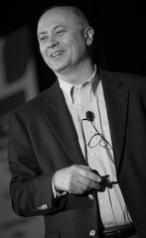
The fate of nuclear power in America is tied to the national economy. A return to growth will spur renewed interest in nuclear generation, according to Michael Rencheck, Areva chief executive officer.

ENERGYBIZ: What is the future of new nuclear power construction in the United States?
|
|
| Michael Rencheck |
Rencheck: There are five plants being built today � for the first time in 30 years. Southern Company is building two Vogtle units in Georgia. SCANA is building two Virgil C. Summer plants in South Carolina. The Tennessee Valley Authority is completing construction on Watts Bar 2.
ENERGYBIZ: Will more units be built after these five?
Rencheck: Electric demand is down. It hasn't recovered anywhere close to pre-recession levels. Shale gas is now capping market prices. Additionally, about 20 to 30 gigawatts of coal are coming out of production. In unregulated power markets, you don't really see a whole lot of plants being built. Until the economy and demand recover, you are going to see a very sluggish growth for new plant additions of any type of technology.
ENERGYBIZ: You are talking to utilities all the time. How many are prepared to build new nuclear plants when conditions change?
Rencheck: Companies that are continuing to pursue the completion of their combined licenses are positioning themselves with a 20-year asset that would give them the option to start new nuclear builds at any time. Small modular reactors are starting to move forward as well.
ENERGYBIZ: What is the future of small modular reactors?
Rencheck: We are working to support different designs around the world. As the economy recovers, there will be demand for new generation and we want to be in the position to have that product offering.
ENERGYBIZ: Is the lesser-developed world embracing new nuclear projects more readily than the developed world?
Rencheck: No. We are in Finland, France, the United Kingdom and China. And we are also involved in Jordan and Turkey, and are now looking at Saudi Arabia. We lost in the United Arab Emirates to the Koreans. But we have been involved in discussions in South Africa. You are looking at different markets with different needs. Most of the energy produced in the United States that's environmentally clean is coming from nuclear power. You see that around the world. When you look at a nuclear power plant, the fuel cost is anywhere between 5 and 15 percent of the total cost of operation. You can vary the fuel price around a lot and it really doesn't change the cost of electricity. That can't be said for gas, oil and other fossil fuels.
ENERGYBIZ: How can we best deal with nuclear waste?
Rencheck: Areva recycles fuel. So we believe 96 percent of the fuel assembly can be recycled based on our experience. We do that in France. We built a recycling plant in Japan. We think recycling makes a very efficient use of energy and energy products. And it can be done very well.
ENERGYBIZ: Are there laws in place that prevent companies from taking spent fuel out of the United States to be recycled?
Rencheck: At this time, yes, we believe there are. We have looked at it before. But we also would be interested in doing that, should policy allow that to happen.
Listen in to our conversation with Michael Rencheck in our upcoming webcast, "The New Energy Mix: Workforce Development in Science Technology, Engineering and Math. To register for the free webcast, to be conducted Oct. 28 noon ET, please click here.
To read more about the future of nuclear power, click here.

Copyright © 1996-2013 by CyberTech, Inc. All rights reserved.
To subscribe or visit go to: http://www.energycentral.com
To subscribe or visit go to: http://www.energybiz.com