Federal Reserve Signals Unpredictable Mortgage Rates Through April, May, June 2014
Mortgage rates and markets change constantly. Stay 100% current by taking The Mortgage Reports by email each day. Click here to get free email alerts, or subscribe to the RSS feed in your browser.
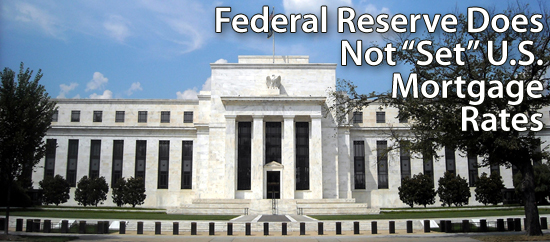
Shopping for the lowest mortgage rates may soon get more difficult.
The Federal Reserve revealed Wednesday that in between its last two Federal Open Market Committee (FOMC) meetings, it held an "emergency meeting" to discuss market changes; and, that the group stands prepared to hold the Fed Fund Rates near zero percent so long as inflation remains low.
Inflation is the enemy of mortgage rates. Therefore, once Wall Street senses inflationary pressures in the U.S. economy, home buyers and refinance households can expect mortgage rates to rise quickly in response.
For the next 3 months or more, mortgage rates may be jumpy.
Click here to get today's live mortgage rates.
Fed Minutes Show U.S. Economy In Transition
Earlier this week, the Federal Reserve recently released the minutes from its March 2014 Federal Open Market Committee (FOMC) meeting.
Known as the Fed Minutes, the report is a complete summary of the FOMC meeting, detailing the conversations and debates which occurred among attending Federal Reserve members.
Similar to minutes published after a condo association meets or when corporate shareholders gather, the Fed Minutes highlight key discussion points among attending parties; and key resolutions reached, if any.
Not surprisingly, the March Fed Minutes is lengthy. The report, which covers two days of Fed meetings, ran 23 pages with more than 8,700 words.
By contrast, the Fed's post-meeting statement which it issued to markets January 29, 2014 was just two pages with less than 900 words total.
The extra detail of March minutes reveal a Federal Reserve divided on the health of the U.S. economy and the appropriate amount of stimulus to apply through the end of 2014, and into 2015 and beyond.
Some Fed members support ending stimulus soon; others ardently oppose that idea.
It's a philosophical tug-of-war for the Federal Reserve, and one which won't likely end soon. The Fed will change its policies based on economic data -- yet there's no consensus at what precise level of employment, inflation or economic expansion that the central banker should act.
Mortgage rates will flux until the Fed gets more clear.
Click here for a live rate quote.
Fed: Inflation Running "Well-Below" Objectives
The March Fed Minutes show that the nation's central banker discussed macro and micro effects on the U.S. economy. In particular, the group had much to say about the housing market.
Fed members noted a general housing market slowdown through January and February as compared to the end of 2013. However, what troubled the Fed was that permits for single-family homes had failed to show "sustained improvement" since last spring.
Permits for single-family homes can be a better indication of the amount of new home construction nationwide. This is because permits are less sensitive to fluctuations in weather, and weather has been oft-cited as a reason for this winter's housing market slowdown.
Some Fed members expressed concern that rising mortgage rates may have produced a "larger-than-expected reduction in home sales".
Related to housing and mortgage rates, the Fed discussed inflation.
Inflation is when purchasing power erodes from rising prices and maintaining a stable inflation rate is one of the Federal Reserve's dual charters. The Fed prefers inflation run at two percent annually. It's currently much lower than that.
Long-term, the Fed expects inflation rates to rise. It does not know when that will occur, however.
The group's zero-percent Fed Funds Rate and QE3 program both induce inflationary pressures. These effects have not yet been felt. Eventually, the Fed believes, U.S. inflation rates will reach two percent or higher. Today, though, inflation falls short.
For mortgage rate shoppers, this can be good.
Inflation is linked to rising mortgage rates because inflation erodes the value of mortgage-backed bonds. As bond values fall, to compensate for that, mortgage rates must rise. Low inflation rates, therefore, support low mortgage rates.
Inflation rates won't remain low forever, however. They can't. But, while they do, mortgage rates remain low.
Get Today's Live Mortgage Rates
The Federal Reserve doesn't make U.S. mortgage rates but it exacts on influence an them. The Fed's rhetoric and policies have helped keep mortgage low since 2009, and will play a role when rates start rising toward five percent.
Today, however, mortgage rates remain low. Compare today's rates with a free online quote. There's no obligation to proceed and no social security number required to get started. Rates are available in an instant.