Staying Ahead of the Storm
How Utilities are Improving Outage Preparation
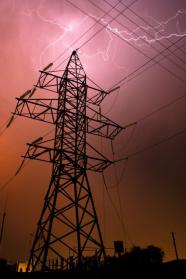
The number of record-breaking storms since 2011,
especially in the Northeast, has brought much
attention to utilities and their ability to handle
emergency response. As millions of Americans have
been battling power outages and energy supply
shortages due to this season's record low
temperatures, consumers are wondering what the
weather might bring next and if their local power
company will be prepared.
Utilities have been busy investing billions of
dollars in resiliency measures and modifying their
emergency response plans. The real results only
become apparent, however, when their activities and
advanced planning are put to the test during a
severe event.
It is clear that public expectations for reliability
and restoration has raised the bar considerably for
utilities. Under the critical eye of both regulators
and customers, we must ask: Are utilities better
prepared today for extreme weather events than they
were before Superstorm Sandy?
There are three important dimensions of storm
preparedness to consider: the role of network
infrastructure hardening (prevention), the role of
responding to outages during an event (reaction) and
the role of stakeholder management (perception).
Prevention:
Utilities continue to make significant investments
in preventative or hardening measures to generation
and transmission facilities. Over the last few years
we have seen a focus on:
- Data-driven asset management decision processes and use of structured methodologies such as PAS 551 are becoming more commonplace, helping utilities to better understand pressure points and maintenance/replacement focus.
- Installation of flood barriers around generation and substation facilities, and ensuring the resistance of flood-prone equipment
- Undergrounding of particularly vulnerable overhead feeders, where such measures are cost effective.
- Integration of more advanced automatic reclosing technologies and DMS software applications are helping in the battle to prevent or limit the impact of outages.
For example, PSE&G plans to spend $2.7 billion over
the next ten years on these types of improvements
for its electric network. Con Edison plans to spend
over 1 billion dollars on their system over the next
three years, also on network system hardening.
However, hardening of generation and transmission
assets takes time and is unlikely to deliver the
immediate benefits necessary to handle this year's
storms.
Reaction:
Ultimately, weather event related damage and outages
are inevitable. Therefore, efforts around
restoration effectiveness have become increasingly
important over the last few years.
Several Midwest and Northeast utilities have been at
the cutting edge of such restoration improvements:
- The testing and implementation of enhanced weather modeling systems, OMS, DMS and AMI applications are providing the necessary tools to forecast and respond to extreme events more effectively. These technologies allow utilities to model in advance service territory impacts and predict the number of damage/outage locations and customers affected.
- Mobile technologies in the field to support Damage Assessment enable utilities to obtain timely and accurate data Ð which is critical to situational awareness during an event. Utilities can ensure that restoration teams are allocated effectively and that field efforts are prioritized based on need.
- Working with regional mutual aid organizations to reform the mutual aid process in order to better allocate adequate foreign resources to the utilities with the most urgent need
- Increased focus on centralized control models based on the Incident Command System structure and smarter field crew allocation Ð this will hopefully lead to enhanced coordination and effectiveness of limited resources, as well as lower costs
- More robust training and storm drills simulated to cover events affecting up to 90% of customer base
Perception:
While preventative and reactive measures are within
a utility's control, it is more difficult for the
utility to control public perception.
No matter how quickly a utility restores power,
there may be a substantial difference between actual
restoration performance and perceived performance in
the eyes of the customer, regulator, politicians and
media during an event. To address this gap,
utilities are:
- Working with regulators to define and understand new scorecards and metrics that better align to the public's expectations around storm response
- Working to make sure that the all-important ETRs (estimated time to restoration) are generated in a more timely and accurate fashion
- Looking at faster modes of communicating, such as social media, text and email alerts
Though utilities may never be able to stay
completely ahead of customer expectations, it is
clear that the industry is stepping up efforts with
respect to emergency response. This longer term step
change will likely involve overhauling the aging
generation and transmission system to make way for a
digital utility that supports automated
troubleshooting via real-time, two-way
communications and perhaps greater local customer
generation / storage to reduce dependency on the
centralized grid.
While we may find ourselves asking, 'Are we better
prepared?' at the outset of each storm season, a
continued focus on prevention, reaction, and
perception measures will undoubtedly help utilities
in their goal to deliver safe and reliable
electricity to their customers.

Copyright © 1996-2014 by CyberTech, Inc. All rights reserved.
To subscribe or visit go to: http://www.energycentral.com
To subscribe or visit go to: http://www.energybiz.com