United States to Ban Raw Meat Sales
Following Joint Agency Decision
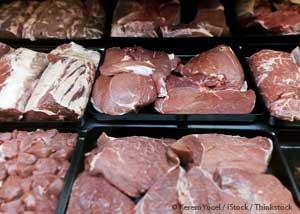
Story at-a-glance
- What started as a ban on raw milk to protect consumer health quickly escalated when the federal health authorities realized just how deadly and tainted American meat is
- The food and food-contaminant combination that causes the most harm to human health is campylobacter in poultry, which sickens more than 600,000 people and costs the US an estimated $1.3 billion a year
- The FDA and USDA will be joining forces to assure “undisputable safety” of all meats sold to Americans by banning raw meat sales
- As an extra measure, all animals will be tagged with transmitters to ensure no direct farm-to-consumer sales will occur
- Tagging of livestock for traceability purposes is already part of the USDA’s Animal Disease Traceability Framework program, which regulates interstate sales of livestock
By Dr. Mercola
Based on past conditioning, the latest developments in the US Food and Drug Administration's (FDA) fight to provide Americans with the safest foods possible may not come as such a great surprise.
What started as a ban on raw milk to protect consumer health quickly escalated when the federal health authorities realized just how deadly and polluted American meats are. After all, raw meat, whether beef, pork, or poultry, is actually responsible for a vast majority of food-borne illnesses.
For example, virtually every E. coli infection can be traced back to the unsanitary conditions in which food-producing animals are being raised, processed, transported, stored, and ultimately sold for human consumption.
As a result, the FDA and US Department of Agriculture (USDA) will be joining forces to assure "undisputable safety" of all meats sold to Americans. And the only feasible way to assure pathogen-free meats, the agencies claim, is to ban raw meat sales. The joint agency agenda is reportedly slated to take effect as early as next year, at which point all meats sold within the US will be pre-cooked.
The FDA and USDA fully realize Americans are becoming more dependent on federal parenting as each year passes, and the rules will ensure nearly all foods Americans eat are irradiated, fumigated, and cooked for our safety.
Raw Meats Pegged as 'Prime Culprits' in Foodborne Disease
Most of the meats you buy in your local grocery store come from animals raised on massive industrial farming arrangements, aptly called "confined animal feeding operations" (CAFOs). Based on the massive amounts of antibiotics used to keep these animals alive in such conditions, one might also call them "confined antibiotic feeding operations".
Over 26,000 Americans die each year from antibiotic resistant infections, a small price to pay for our indulgence of CAFO meats.Covered in feces and urine, dehydrated, and often sickly, these animals are then slaughtered using mechanized tools and procedures that convey this infection-loaded excreta into the final meat product.
Dr. Shiv Chopra has discussed this sickening reality in my newsletter on a number of occasions. Dr. Shiv Chopra was a drug company insider and also worked for what is now Health Canada -- the Canadian equivalent of the FDA – for 35 years.
The food and food-contaminant combination that causes the most harm to human health is campylobacter in poultry, which sickens more than 600,000 people and costs the US an estimated $1.3 billion a year. In second place is toxoplasma in pork, costing society another $1.2 billion annually.
Despite the obvious reality of foodborne illness, very little was actually known about which foods are the most risky, until a report1 from the University of Florida's Emerging Pathogens Institute revealed the pathogen-food combinations most likely to make you sick. The report, issued in 2011, showed that the data overwhelmingly pointed to tainted meats as the prime culprits.
Realizing that pasteurization of animal products such as milk falls way short of protecting human health, the FDA and USDA have now decided to tackle the number one source of costly foodborne illness, namely raw meats. According to a confidential source within the newly created joint agency taskforce:
"If people are careless enough to drink raw milk straight from a cow's udder, they're probably too ignorant to purchasing raw meat. We've decided to just go ahead and cook everything. Americans won't be trusted with any raw meats or dairy products going forward."
"We believe that, in the end, most Americans will appreciate these efforts to keep them safe, and will come to embrace the added convenience of pasteurized- and other pre-cooked meats the current highly processed food diet controlled by our federal government. We will also ensure additional subsidies are added for the CAFO industries to pay for this critical security measure."
Farm-to-Consumer Sales to Be Eliminated
As an extra measure, all animals will be tagged with transmitters to ensure no direct farm-to-consumer sales will occur. While this may sound drastic to some, it's certainly not new. Tagging of livestock for traceability purposes is already part and parcel of the USDA's Animal Disease Traceability Framework program,2 which regulates interstate sales of livestock.
Food processors have managed to reduce a farmers share of the goods they sell to just 7% of the retail price. This also ensures the continued erosion of the small family farms, where dangerous practices of selling direct to consumer may occur.The final rule on this program was issued on January 9, 2013. The rule became effective on March 11, 2013. Four years ago, farmers criticized the plan as "draconian" in scope,3 warning it was just another scheme to control the livestock industry and favoring multinational meat packers. Little did they (or anyone else, for that matter) realize this program would become a key tool for banning the sale of raw meat altogether.
Commercial Pre-Cooking Guidelines for Safer Meats
As described in documentation4 by the Food and Agriculture Organization of the United Nations (FAO), precooking substantially reduces the bacterial content of raw meats and other trimmings. (Meat trimmings, which are particularly prone to pathogenic contamination must already undergo both precooking and a second heat treatment.)
Other changes under consideration include a health claim on foods processed with the fumigant sulfuryl fluoride, indicating its benefit to dental health. As recently discussed by FluorideAlert.org,6 an amendment to the Farm Bill orders the US Environmental Protection Agency (EPA) to ignore its previous ruling7 that fluoride left in food treated with sulfuryl fluoride is unsafe for consumers.
The FDA, which oversees health claims on food labels, is currently reviewing the application to ensure the health message complies with labeling requirements.
FDA/USDA Plan for Safeguarding Children and Elderly
There are even rumors of closed-door discussions about premasticated meat products, aimed at young children and the elderly, both of which have been identified as groups most likely to choke to death on solid meats.
According to the National Safety Council, choking accounts for an estimated 2,500 deaths each year in the US,8 and children under the age of three are at greatest risk. A 2010 study published in the journal Maternal & Child Nutrition9 discusses the health benefits of premasticated foods on child health.According to previous studies, 63 percent of Chinese university students received premasticated food as infants, suggesting there may be sufficient societal acceptance of such foodstuffs, despite cross-cultural studies failing to show any significant prevalence of this practice in the West. The study also raises questions about the safety of infant exposure to another person's saliva (typically the mother's).
Clearly, in the case of mass produced foods, such concerns would be superfluous, as the premastication would be done by mechanical means, employing a pharmaceutical grade digestive enzyme solution, guaranteed to be void of any potential pathogens associated with human saliva.
Burgeoning Sales of Breast Milk Spawns New Regulatory Considerations
Breast milk is also being reevaluated for safety, following an emerging trend of lactating mothers selling their milk. The practice started gaining traction several years ago, and I initially wrote about this novel opportunity back in 2011. Nursing women can earn upwards of $1,200 a month from selling their excess breast milk. Many simply pair up online via Craigslist and other classified sites.
It was really only a matter of time before the pasteurization issue would crop up, seeing how there's virtually no difference between raw cow's milk and raw breast milk. Both contain live enzymes and bacteria. While the FDA has yet to take a stand against breast milk when the baby is nursing at the breast, it claims there are significant health risks involved when milk is expelled from the breast, and then consumed from a bottle without undergoing pasteurization. As previously stated by the La Leche League:10
"Health care providers and researchers have expressed concern that the casual exchange of human milk could be a potential route of transmission for drugs and viruses."
It's still unclear when the FDA will publish its proposed rule on human milk consumption, but I wouldn't be surprised if it will be modeled after human milk banks such as the Human Milk Banking Association of North America,11 which pasteurizes all donated breast milk prior to distribution.
The Real Power Is in Your Hands... For Now
I’ve often stated that if every American decided to not purchase food that comes from CAFOs, the entire system would collapse overnight. If this wasn't an April Fool's joke, the implementation of a nationwide ban on raw meat would have permanently closed this window of opportunity for change. Fortunately, sourcing your foods from a local farmer is still one of your best bets to ensure you're getting wholesome food, and I would encourage you to do so, to strenghten the availability of a truly sustainable food supply. The following organizations can help you locate farm-fresh foods in your local area:
- Local Harvest -- This Web site will help you find farmers' markets, family farms, and other sources of sustainably grown food in your area where you can buy produce, grass-fed meats, and many other goodies.
- Farmers' Markets-- A national listing of farmers' markets.
- Eat Well Guide: Wholesome Food from Healthy Animals -- The Eat Well Guide is a free online directory of sustainably raised meat, poultry, dairy, and eggs from farms, stores, restaurants, inns, and hotels, and online outlets in the United States and Canada.
- Community Involved in Sustaining Agriculture (CISA) -- CISA is dedicated to sustaining agriculture and promoting the products of small farms.
- FoodRoutes -- The FoodRoutes "Find Good Food" map can help you connect with local farmers to find the freshest, tastiest food possible. On their interactive map, you can find a listing for local farmers, CSAs, and markets near you.
Happy April Fool's Day!
Copyright 1997- 2014 Dr. Joseph Mercola. All Rights Reserved.
http://articles.mercola.com/sites/articles/archive/2014/04/01/raw-meat-sales.aspx