Fed Cuts QE3 For Third Straight Meeting; Mortgage Rates Sharply Higher
Mortgage rates and markets change constantly. Stay 100% current by taking The Mortgage Reports by email each day. Click here to get free email alerts, or subscribe to the RSS feed in your browser.
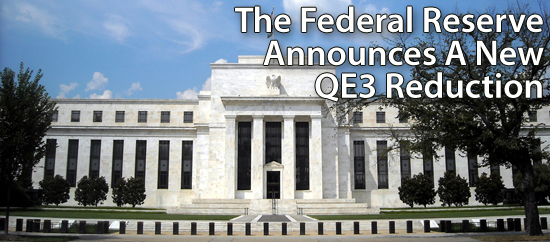
Mortgage rates are rising sharply after the Federal Reserve's March 2014 FOMC meeting.
The central banker described the U.S. economic growth as having "slowed" during the winter months, and acknowledged inflation rates as less-than-optimal. The Fed also announced the next phase of its QE3 taper, to being in April.
QE3 is a economic stimulus program which aims to suppress U.S. mortgage rates. As the size of QE3 shrinks, mortgage rates are expected to rise. The April taper marks the third round of reductions to the QE3 program.
Click here to see today's mortgage rates.
One Dissenting Vote, No Change In Rates
Wednesday, for the 43nd consecutive meeting, the Federal Open Market Committee (FOMC) voted to leave the Fed Funds Rate unchanged near 0.000 percent, extending the Federal Reserve's highly accommodative fiscal policy by another six weeks, at least.
In addition, the group elected to reduce the size of its current quantitative easing program, a program more commonly known as "QE3".
The moves did not surprise Wall Street. The Fed Funds Rate is expected to to remain near zero percent deep into 2016; and the Federal Reserve has been vocal that QE3's wind-down would be measured and steady, barring economic shock.
The Fed continues to keep an eye on inflation rates, though.
Today's rate of inflation barely exceeds one percent -- the range in which it's been for more than one year.
To the Fed, a one-percent inflation rate is too low. It believes inflation should run near two percent to promote a healthy U.S. economy. When inflation is too low, it can lead to falling prices and deflation. This is among the reasons why the Federal Reserve changed its forward guidance on the Fed Funds Rate.
Previously, the Fed has said that the Fed Funds Rate will remain near zero percent for as long as the unemployment rate is above 6.5%. In its March 2014 press statement, the Fed removed the unemployment rate trigger, announcing that the group will leave its ZIRP (Zero-Interest Rate Policy) in place as needed, and as a tool to boost inflation.
The Federal Reserve used its post-meeting press release to note that household spending and business fixed investment "continue to advance"; and to say that the housing market's recovery remains slow.
The Fed also continues to monitor employment and labor markets, as dictated by its charter. Unemployment rates "remains elevated"; and labor market indicators showed further improvement.
Compare today's new mortgage rates here.
Mortgage Rate Stimulus Program Shrinks Again
The Federal Reserve also announced that it will reduce the size of of its third quantitative easing round, a program known as QE3.
The Fed first announced QE3 in September 2012. Via the program, the Federal Reserve said it would $85 billion in long-term bonds monthly, split between U.S. Treasury bonds and mortgage-backed securities (MBS).
As a net purchaser of bonds, the Federal Reserve aimed to raise demand for long-term bonds which, in turn, would cause their prices to fall. For U.S. consumers, this would mean lower mortgage rates available via banks and mortgage brokers.
QE3 was a success. With weeks of its launch, U.S. mortgage rates had dropped to their lowest point ever and refinancing surged -- especially for the government's HARP 2 mortgage refinance.
Now, the Fed is phasing QE3 out.
After its December 2013 meeting, the Federal Reserve announced a ten billion dollar cut the program, split evenly between Treasuries and mortgage bonds. After its January 2014 meeting, it elected to do the same, in the same proportions.
The March meeting marks the third cut to QE3 -- also a $10 billion cut.
QE3 purchases are now comprised of $30 billion in U.S. Treasuries and $25 billion in mortgage-backed bonds monthly, to begin in April. The taper loosens further the artificial cap that the Fed has placed on mortgage rates.
As QE3 shrinks, mortgage rates are expected to rise.
What Will Mortgage Rates Do Now?
Mortgage rates worsened after the Federal Reserve's March
meeting, likely because the Fed has changed its message. However,
Fed Chairwoman Janet Yellen insists that committee views have not
changed.
Wall Street disagrees. Rates are 0.250 percentage points higher for some conforming and FHA products from prior to the Fed's announcement. If you're looking to lock a rate, then, it may be best to get a rate quote quickly.
Compare today's low rates here. Rates are available at no cost, with no obligation, and with no social security number required to get started.