Stream-reach hydropower still untapped
The U.S. Department of Energy (DOE) and Oak Ridge National Laboratory estimates more than 65 GW of new hydropower development potential across more than three million U.S. rivers and streams -- nearly equivalent to the current U.S. hydropower capacity -- demonstrating one of the ways in which the United States can diversify its energy portfolio with sustainable and clean domestic power generation.
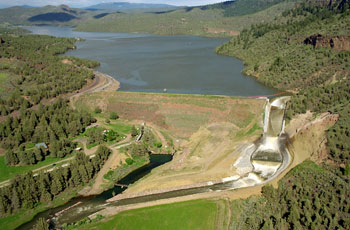 |
|
Credit: U.S. Bureau of Reclamation |
The United States has tremendous untapped clean energy resources. Hydropower makes up seven percent of total U.S. electricity generation and continues to be the United States' largest source of renewable electricity, avoiding over 200 million metric tons of carbon emissions each year, according to DOE. Hydropower also provides reliable baseload power day and night, providing greater flexibility and diversity to the electric grid and allowing utilities to integrate other renewable sources such as wind and solar power.
The DOE's current assessment builds on recent advancements in geospatial datasets and represents the most detailed evaluation of U.S. hydropower potential at undeveloped streams and rivers to date. The greatest stream-reach hydropower potential exists in western states, including Alaska, California, Colorado, Idaho, Montana, Oregon and Washington.
In 2012, DOE found more than 12 GW of hydropower potential at 80,000 non-powered dams in the U.S. There are still many opportunities to develop new hydropower projects around the country, many which would likely be smaller, run-of-river facilities that could utilize new low-impact designs and technologies.
For more:
- see this
report
© 2014 FierceMarkets, a division of Questex Media Group LLC. All rights reserved.
http://www.fierceenergy.com/story/stream-reach-hydropower-still-untapped/2014-04-30