GMO Farmer: ‘I Won’t Eat My Own Crops’
Thanks to Monsanto, he feels he has no choice
Like a thousand other farmers across the US, Kirk Bair is a farmer looking for ways to grow food economically and with as little labor as possible – but what are the moral implications of planting food you are aware is toxic, and selling it to your friends and neighbors? Is Bair in the right for planting GMO seed, even if conventional seed is hard to come by?
Bair has said:
“When you put a herbicide gene inside a corn seed, soybean, wheat, whatever you’re working with, you’re eating that. You’re ingesting it.”
It is clear that Bair realizes the health dangers of GM crops, but he plants them anyway? Why? He feels he has no choice, and there is a multi-billion dollar industry calling the shots.
“I’ve got some good looking ears coming,” said Kirk Bair, admiring his genetically modified corn crop, developed with Monsanto’s technology.
When asked why he has planted GM corn, Blair states:
“To use conventional corn, non-GMO, I’d have to till, apply pre-emergence herbicide. It’s more economical and more convenient to use GMO corn on real ground. I only use it because I felt like I had to. My seed supplier said, ‘Kirk it’s harder and harder to get a hold of conventional seed.’”
In less than a decade, the US has gone from planning 100% conventional seeds to almost 90% genetically modified seeds. Corn, soybeans and cotton are some of the most commonly grown GM crops – all considered staples.
Even though Blair grows GM crops, he says:
“I want to know what I am eating and I don’t want to eat GMO foods.”
Imagine that – a farmer who won’t eat his own crops. He has even supported labeling initiatives in California stating:
“People need know what they’re eating. People want to know what they’re eating.”
Read: 800 Scientists Demand Global ‘GMO Experiment’ End
This is a strange phenomenon – when farmers will knowingly plant crops they realize are dangerous to human health. Are they right about giving in to Monsanto, Bayer, and Syngenta when banned GM crops are being found in Europe, or when they are growing in Oregon and Minnesota fields without permission?
What about cross-pollination? Is a farmer’s ability to grow non-GMO completely compromised already to such a degree that she or he has to just shut down their tilling machines like a defeated warrior laying down his sword?
One biotech company claims the following reasons that farmers plant GM crops:
“Because they benefit from the technology – after all, 17.3 million farmers around the world do so, and their numbers grow each season.
In addition to higher yields and higher farm income, their reasons include:
- Increased management flexibility
- Easier adoption of no- or reduced till farming, which saves time, equipment usage, and carbon emissions
- Improved weed control
- Soil preservation
- Less worry about pest damage
- Less time spent on crop walking and/or insecticide application
- Savings in energy use – mainly associated with less spraying and tillage
- Savings in machinery use (for spraying and possibly reduced harvesting times)
Improved quality (e.g., lower levels of mycotoxins in GM insect-resistant maize)”
To the astute reader, there are several items on this list that are completely false – ‘less worry about pest damage’ could elicit an entire book of refutation. GM crops have increased worry about pest infestation. Theemergence of superweeds and superbugs was in tandem with GM planting.
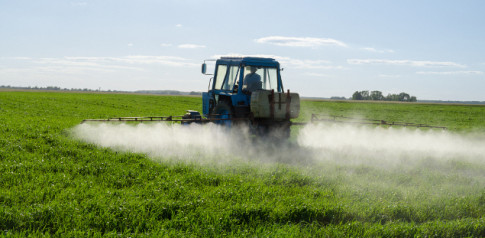
The ‘savings in machinery’ is arguable too, as more and more herbicide and pesticide use likely eats up any saved costs from having to spray more often – not less. The soil is also not preserved with GM crop planting – but destroyed. This has been proven many times over.
Multiple studies have looked at GM planting and its effects on the soil. One such study explains:
. . .residues of Bt maize plants that are ploughed into the soil following harvest suppress its ability to respire (produce carbon dioxide), it also reduces mycorrhizal colonisation and seriously alters bacterial populations within the soil ecosystem. This function of soil is vitally important for regulating plant growth and vitality, and for increasing availability of minerals and nutrients.
. . . Bt toxins persist in the soil for a considerable amount of time, which impedes the soil flora recovery and impacts upon plant health and growth in subsequent growing seasons.”
Addressing the other items on the list like improved quality are questionable, as are many other of the fallacious reasons given by EuropaBio.
Many farmers simply won’t accept the biotech misinformation that has been dished out for decades. The Rodale Research Institute on Organic Farming and Gardening lists thousands of farmers who know a better way. Since the 1940s and prior, this country has been growing food without chemicals and GM technology. It is more than possible, and now more than ever, vital.
It is understandable how farmers could initially feel drawn to the Big Ag model, based largely on the calculating lies of the biotech industry – but hopefully more farmers are seeing through biotech’s façade.
Bair seems to have seen behind Oz’s curtain to some degree, but he and other farmers like him obviously need public support to choose non-GM seeds and grow them.
You don’t fight a multi-billion dollar industry on a few acres. Perhaps Bair will join the ranks of Dr. Theirry Vrain, a former pro-GMO scientist who now whistleblows on the entire industry. That would be redemption.
Source(s):
infiniteunknown.net
Health Freedom Alliance
Health & Wellness Foundation
CHAD Foundation
http://www.healthfreedomalliance.org
http://www.healthfreedoms.org/gmo-farmer-i-wont-eat-my-own-crops/