There is an approximately 50-60%
chance of El Niño conditions during the next two months, with
ENSO-neutral favored thereafter.
During
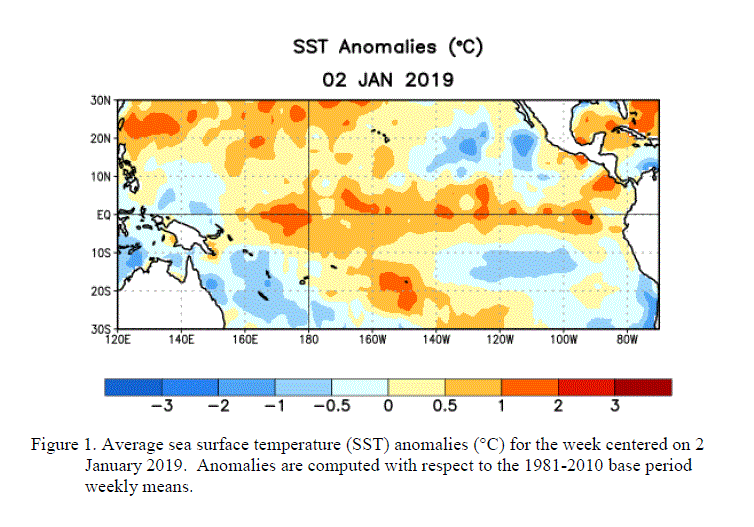
December 2014, positive sea surface temperature (SST) anomalies
decreased across the central and east-central equatorial Pacific
(Fig.
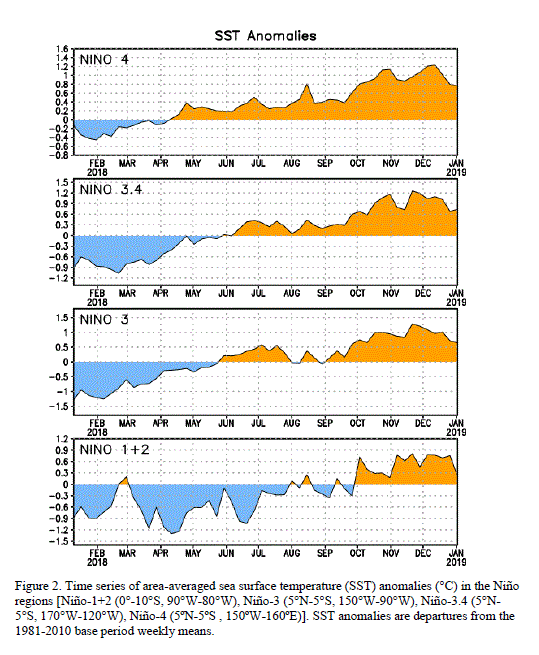
1). At the end of the month, the weekly Niño indices ranged
from +0.8oC in the Niño-4 region, to +0.5oC
in the Niño-3.4 region, to 0.0oC in the Niño-1+2
region (Fig.
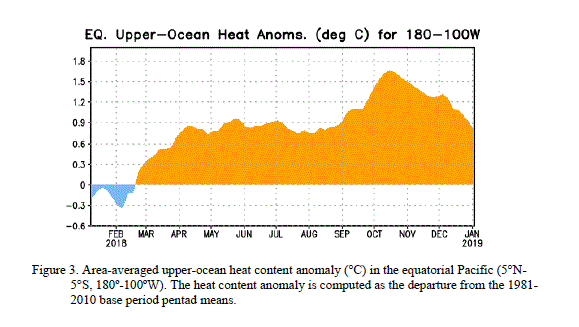
2). The positive subsurface heat content anomalies (averaged
between 180o-100oW) also decreased during
December (Fig.
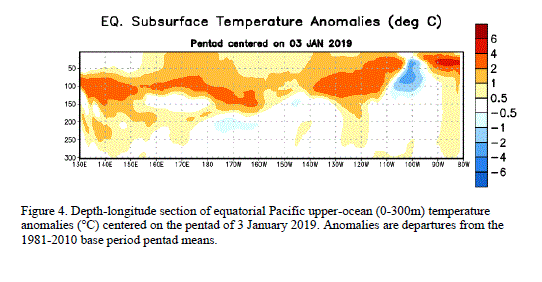
3) in response to an upwelling equatorial oceanic Kelvin
wave (Fig.
4). Although the surface and sub-surface temperature
anomalies were consistent with El Niño, the overall atmospheric
circulation continued to show only limited coupling with the
anomalously warm water. The equatorial low-level winds were
largely near average during the month, while upper-level
easterly anomalies continued in the central and eastern tropical
Pacific. The Southern Oscillation Index (SOI) remained slightly
negative, but the Equatorial SOI remained near zero. Also,
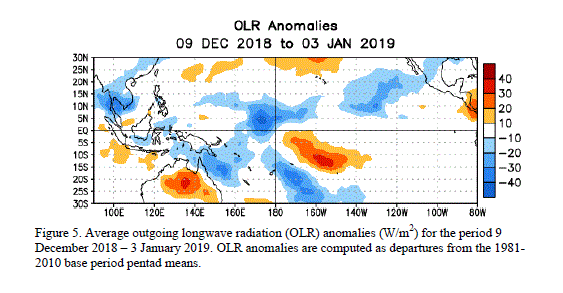
rainfall remained below-average near the Date Line and was
above-average over Indonesia (Fig.
5). Overall, the combined atmospheric and oceanic state
remains ENSO-neutral.
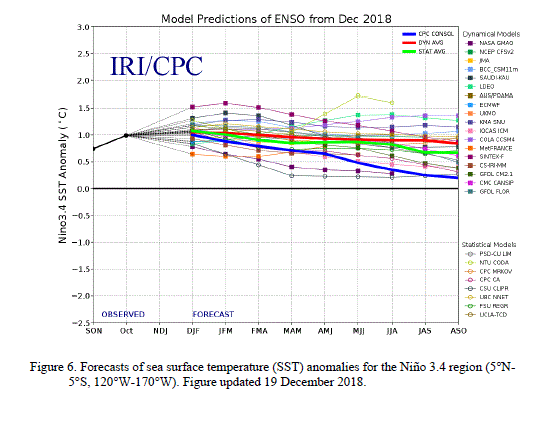
Similar to
last month, most models predict the SST anomalies to remain at
weak El Niño levels (3-month values of the Niño-3.4 index
between 0.5oC and 0.9oC) during
December-February 2014-15, and lasting into the Northern
Hemisphere spring 2015 (Fig.
6). If El Niño were to emerge, the forecaster consensus
favors a weak event that ends in early Northern Hemisphere
spring. In summary, there is an approximately 50-60% chance of
El Niño conditions during the next two months, with ENSO-neutral
favored thereafter (click
CPC/IRI consensus forecast for the chance of each outcome).
This
discussion is a consolidated effort of the National Oceanic and
Atmospheric Administration (NOAA), NOAA's National Weather
Service, and their funded institutions. Oceanic and atmospheric
conditions are updated weekly on the Climate Prediction Center
web site (El
Niño/La Niña Current Conditions and Expert Discussions).
Forecasts are also updated monthly in the
Forecast Forum of CPC's Climate Diagnostics Bulletin.
Additional perspectives and analysis are also available in an
ENSO
blog. The next ENSO Diagnostics Discussion is scheduled for
5 February 2015. To receive an e-mail notification when the
monthly ENSO Diagnostic Discussions are released, please send an
e-mail message to:
ncep.list.enso-update@noaa.gov.
|