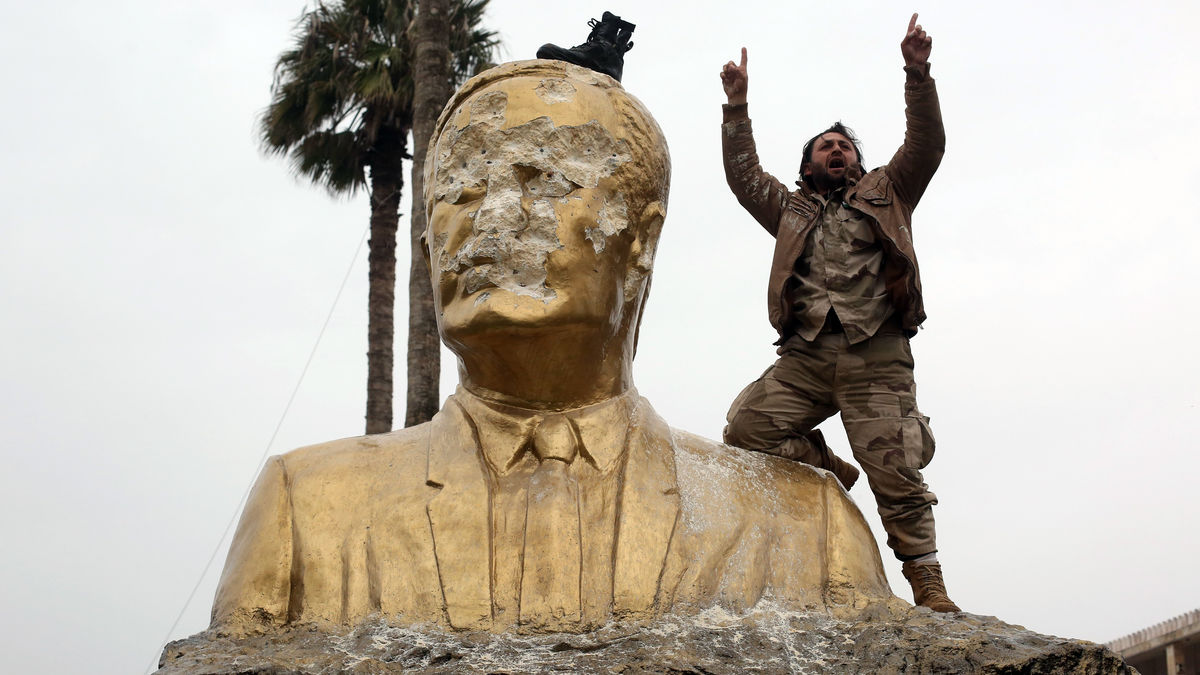
(Bloomberg) -- The capture of the Syrian city of Idlib by Islamist militants may undermine President Bashar al-Assad’s claim to have the upper hand in the country’s civil war and stir unrest among his supporters, analysts said.
A local al-Qaeda affiliate led the fighters who seized the northwestern city on Saturday after a four-day offensive, according to the U.K.-based Syrian Observatory for Human Rights, which monitors the conflict.
It’s the second province to fall to Islamist militants, more than two years after Islamic State captured Raqqa and turned the northern city into the capital of its self-declared caliphate. Idlib is near the strategic highway linking Damascus to Aleppo, Syria’s former commercial hub and site of some of the fiercest fighting in the four-year war.
“The fall of Idlib will represent a big shock within the regime and its supporting circles,” Charles Lister, a specialist in Middle East insurgents and visiting fellow at the Brookings Doha Center, said in an e-mail. The Syrian economy is in “dire straits,” the military appears to be experiencing notable losses, and public frustration has appeared within pro-Assad parts of the country, he said.
Al Jazeera television cited activists as saying Assad’s forces struck Idlib a day after the city fell.
‘Big Question’
Warplanes raided areas in Idlib, the Observatory said Monday. Rebels who entered the town found at least 15 bodies in a prison run by government forces, suggesting they were executed before the province fell, the group said.
“Assad will likely bomb Idlib so that its captors find little peace in their new prize,” said Joshua Landis, director of the Center for Middle East Studies at University of Oklahoma.
Assad still rules over much of Syria, but is running out of money and men, while new rebel governments are emerging that look increasingly like real states, Landis said.
The coalition that captured Idlib includes Ahrar al-Sham as well as the al-Qaeda-linked Nusra Front.
Its fall undercuts Assad’s claims that he is getting close to defeating the groups that his government labels as terrorists, according to Emile Hokayem, a senior fellow at the International Institute for Strategic Studies-Middle East in Manama. Islamist factions have shown their ability to cooperate militarily, he said.
“The big question now is the governance of Idlib,” Hokayem said. “Should harsh Islamist rule be imposed, the fall of the city may actually deter further urbanites in Damascus and elsewhere from mobilizing in favor of the rebellion.”
It’s also likely that “the conflict between the Islamists within the anti-regime camp will only intensify” as they gain ground, said Ghanem Nuseibeh, founder of Middle East risk adviser Cornerstone Global Associates in Dubai.
To contact the reporter on this story: Nafeesa Syeed in Dubai at nsyeed@bloomberg.net
To contact the editors responsible for this story: Alaa Shahine at asalha@bloomberg.net Ben Holland, Caroline Alexander