Here's What Sitting Too Long Does to Your Body
Story at-a-glance
- While a brief period of sitting here and there is natural, long periods of sitting day-in and day-out can seriously impact your health and shorten your life
- Prolonged sitting increases your risk of heart disease, diabetes, obesity, and more
- Stand as much as possible, while working and during leisure activities, and try to walk 10,000 steps a day
By Dr. Mercola
Your body is designed for regular movement, but many Americans spend the bulk of their day sitting still instead. On average, a US adult spends nine to 10 hours each day sitting,1 which is so much inactivity that even a 30- or 60-minute workout can't counteract its effects.2
As Katy Bowman, a scientist and author of the book: Move Your DNA: Restore Your Health Through Natural Movement, told Reuters:3
"Actively sedentary is a new category of people who are fit for one hour but sitting around the rest of the day… You can't offset 10 hours of stillness with one hour of exercise."
Worse still, many Americans don't fit in a workout or a long walk either, which means their bodies are virtually always in a sedentary state. It's not that sitting is inherently dangerous… the danger is in the dose.
While a brief period of sitting here and there is natural, long periods of sitting day-in and day-out can seriously impact your health and shorten your life.
What Happens to Your Body When You Sit for Too Long?
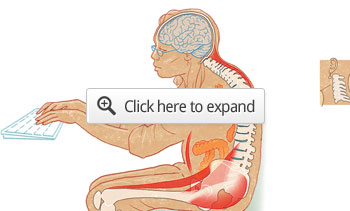
Dr. James Levine, co-director of the Mayo Clinic and the Arizona State University Obesity Initiative, and author of the book Get Up! Why Your Chair Is Killing You and What You Can Do About It, has dedicated a good part of his career to investigating the health effects of sitting.
His investigations show that when you've been sitting for a long period of time and then get up, a number of molecular cascades occur. For example, within 90 seconds of standing up, the muscular and cellular systems that process blood sugar, triglycerides, and cholesterol—which are mediated by insulin—are activated.
All of these molecular effects are activated simply by carrying your own bodyweight. These cellular mechanisms are also responsible for pushing fuel into your cells and, if done regularly, will radically decrease your risk of diabetes and obesity.
In short, at the molecular level, your body was designed to be active and on the move all day long. When you stop moving for extended periods of time, it's like telling your body it's time to shut down and prepare for death. The Mind Unleashed featured a particularly noteworthy description of what happens in various areas of your body after prolonged sitting:4
Organ Damage
- Heart: When you sit, blood flows slower and muscles burn less fat, which makes it easier for fatty acids to clog your heart. Research published in the Journal of the American College of Cardiology, for instance, showed that women who sit for 10 or more hours a day may have a significantly greater risk of developing heart disease than those who sit for five hours or less.5
- Pancreas: Your body's ability to respond to insulin is affected by just one day of excess sitting, which leads your pancreas to produce increased amounts of insulin, and this may lead to diabetes.
Research published in Diabetologia found that those who sat for the longest periods of time were twice as likely to have diabetes or heart disease, compared to those who sat the least.6 Sitting for more than eight hours a day has also been associated with a 90 percent increased risk of type 2 diabetes.7
- Colon Cancer: Excess sitting may increase your risk of colon, breast, and endometrial cancers. The mechanism isn't known for certain, but it could be due to excess insulin production, which encourages cell growth, or the fact that regular movement boosts antioxidants in your body that may eliminate potentially cancer-causing free radicals.
Findings presented at the 2015 Inaugural Active Working Summit also found that sitting increases:8
- Lung cancer by 54 percent
- Uterine cancer by 66 percent
- Colon cancer by 30 percent
Another reason for this increased cancer risk is thought to be linked to weight gain and associated biochemical changes, such as alterations in hormones, metabolic dysfunction, leptin dysfunction, and inflammation—all of which promote cancer.
- Digestion: Sitting down after you've eaten causes your abdominal contents to compress, slowing down digestion. Sluggish digestion, in turn, can lead to cramping, bloating, heartburn, and constipation, as well as dysbiosis in your gastrointestinal tract, a condition caused by microbial imbalances in your body. According to Microbial Ecology in Health and Disease:9
"There is growing evidence that dysbiosis of the gut microbiota is associated with the pathogenesis of both intestinal and extra-intestinal disorders. Intestinal disorders include inflammatory bowel disease, irritable bowel syndrome (IBS), and celiac disease, while extra-intestinal disorders include allergy, asthma, metabolic syndrome, cardiovascular disease, and obesity."
Brain Damage
- Your brain function slows when your body is sedentary for too long. Your brain will get less fresh blood and oxygen, which are needed to trigger the release of brain- and mood-enhancing chemicals.
Posture Problems
- Strained Neck and Shoulders: It's common to hold your neck and head forward while working at a computer or cradling a phone to your ear. This can lead to strains to your cervical vertebrae along with permanent imbalances, which can lead to neck strain, sore shoulders and back.
- Back Problems: Sitting puts more pressure on your spine than standing, and the toll on your back health is even worse if you're sitting hunched in front of a computer. It's estimated that 40 percent of people with back pain have spent long hours at their computer each day.
The disks in your back are meant to expand and contract as you move, which allows them to absorb blood and nutrients. When you sit, the disks are compressed and can lose flexibility over time. Sitting excessively can also increase your risk of herniated disks.
Personally, after I reduced my normal 12 to 14 hours of daily sitting to under one hour, the back pain I'd struggled with for decades disappeared.
Muscle Degeneration
- Standing requires you to tense your abdominal muscles, which go unused when you sit, ultimately leading to weak abdominals.
- Hip Problems: Your hips also suffer from prolonged sitting, becoming tight and limited in range of motion because they are rarely extended. In the elderly, decreased hip mobility is a leading cause of falls.
Sitting also does nothing for your glutes, which may become weakened, affecting your stability and the power of your stride when walking and jumping.
Leg Disorders
- Varicose Veins: Sitting leads to poor circulation in your legs, which can cause swelling in your ankles, varicose veins, and blood clots known as deep vein thrombosis (DVT).
- Weak Bones: Walking, running, and engaging in other weight-bearing activities lead to stronger, denser bones. Lack of activity may cause weak bones and even osteoporosis.
Too Much Sitting Can Take Years Off Your Life
The more hours you spend sitting in a day, the shorter your lifespan may be. One study found, for instance, that reducing the average time you spend sitting down to less than three hours a day could increase your life expectancy by two years.10
Another study, published in the British Journal of Sports Medicine, concluded that each hour spent watching television after the age of 25 reduces your life expectancy by nearly 22 minutes.11 To put this into perspective, the authors compared it to smoking – each cigarette reduces your life expectancy by about 11 minutes. All in all, the researchers found that adults who spend an average of six hours in front of the TV will reduce their life expectancy by just under 5 years, compared to someone who does not watch TV. Obesity Panacea made a good point in its report on this study:12
"These sorts of theoretical studies obviously need to be taken with a large dollop of salt (just like the recent Australian study which estimated that every hour of TV viewing shortens your life by 25 minutes). The point is simply that there is a non-negligible impact of sitting/TV viewing on mortality, and given the extremely high prevalence of these behaviors at the population level, they can have noticeable impact on the lifespan of the population as a whole."
How to Get Up and Get Moving
I believe high-intensity exercises are an important part of a healthy lifestyle, but considering the fact that more than half of American men, and 60 percent of American women, never engage in any vigorous physical activity lasting more than 10 minutes per week,13 while at the same time sitting for hours on end, it's clear that most people need to begin by simply getting more non-exercise movement into their daily routine.
It sounds simple, doesn't it? Simply get up and move. The reality can be harder to get used to, since most people are so used to sitting while they work, eat, and watch TV. I recommend using a pedometer, or better yet, one of the newer wearable fitness trackers that can also give you feedback on your sleeping patterns, which is another important aspect of good health. At first, you may be surprised to realize just how little you move each day.
Setting a goal of say 7,000 to 10,000 steps a day (which is just over three to five miles, or 6-9 kilometers) can go a long way toward getting more movement and less sitting into your life. This should be over and above any exercise regimen you may have. I personally am doing about 14,000-15,000 steps a day. The only way I can get this many steps in is to walk for 90 minutes. Tracking your steps can also show you how simple and seemingly minor changes to the way you move around at work can add up. For example, you can:
- Walk across the hall to talk to a coworker instead of sending an email
- Take the stairs instead of the elevator
- Park your car further away from the entrance
- Take a longer, roundabout way to your desk
Other simple ways to increase your physical movement and avoid sitting down at work include:
- Organize the layout of your office space in such a way that you have to stand up to reach oft-used files, the telephone, or your printer, rather than having everything within easy reach.
- Use an exercise ball for a chair. Unlike sitting in a chair, sitting on an exercise ball engages your core muscles and helps improve balance and flexibility. Occasional bouncing can also help your body interact with gravity to a greater degree than sitting on a stationary chair. But this is a concession and it is still sitting, so standing would be a better option.
- Alternatively, use an upright wooden chair with no armrest, which will force you to sit up straight, and encourage shifting your body more frequently than a cushy office chair.
- Set a timer to remind you to stand up and move about for at least 10 minutes each hour. You can either walk, stand, or take the opportunity to do a few simple exercises by your desk. For an extensive list of videos demonstrating such exercises, please see my previous article, "Intermittent Movement Benefits Your Health. Here's How to Get More of It into Your Work Day."
- Use a standing workstation. For a demonstration on proper posture, whether you're sitting or using a standing workstation, check out Kelly Starrett's video. We are in the process of providing all our employees at mercola.com standing desk options. If you have a sit-down job, I would strongly encourage you to present this information to your employer and get a stand-up desk.
How to Sit Smarter
The evidence is overwhelming at this point—10,000 studies and growing—that prolonged sitting will reduce your lifespan by promoting dozens of chronic diseases, even if you exercise regularly. I've previously recommended standing up and doing exercises at your desk every 10-15 minutes to counteract the ill effects of sitting, but after reading Dr. Levine's book, I'm convinced even that may be insufficient if you're seeking optimal health. I really think the answer is to stand up as much as possible.
That said, sitting is sometimes necessary, so when you do sit following the recommendations by "posture guru" Esther Gokhale can go a long way toward improving posture-related pain associated with prolonged sitting, and will likely help ameliorate the worst risks of sitting. The basics of healthy sitting include the following points:
- Stack sitting: In order to allow the bones in your spine to stack well and permit the muscles alongside them to relax, sit with your behind sticking out behind you, but not exaggeratedly so. Now, when you breathe, each in-and-out breath will automatically lengthen and settle your spine.
This gentle movement stimulates circulation and allows natural healing to go on even while you sit. While conventional advice tells you to tuck in your pelvis to maintain an S-shaped spine, Esther has found that a J-spine is far more natural. A J-spine refers to a posture where your back is straight, your lumbar relatively flat, and your buttocks are protruding slightly. By tucking your pelvis, you lose about a third of the volume in your pelvic cavity, which squishes your internal organs. This can compromise any number of them in a variety of ways.
This is further compounded if you're both "tucked" and "hunched" while sitting. This biomechanically correct posture allows you to move freely, discourages pain, and allows your digestive organs to function without restrictions or blockages.
- Stretch sitting. Another way to elongate your spine is by using your backrest as a traction device. You can see her demonstrate this move in the video below. You will need either a towel or a specially designed traction cushion for this purpose. This simple maneuver brings your back away from the backrest, lengthens your spine, and then roots you higher up against the backrest.
This position helps you maintain an elongated spine, and by getting traction on your discs, you allow them to rehydrate and prevent the nerves from being impinged between your vertebrae. It will also help flatten out your lumbar area, and this alone can sometimes provide immediate pain relief if you have sciatic nerve root pain.
Remember, however, that for optimal health sitting should be your last resort when you have no alternative. It is far better for you to stand than sit. It might take a bit to adjust but once you do it will be every bit as comfortable as sitting. As noted by Dr. Levine, while we clearly need to rest from time to time, that rest is supposed to break up activity—not the other way around. Inactivity—sitting—is not supposed to be a way of life.
© Copyright 1997-2015 Dr. Joseph Mercola. All Rights Reserved.
http://fitness.mercola.com/sites/fitness/archive/2015/05/08/sitting-too-long.aspx