Spiritless Humans

21st November 2015
By Montalk
Guest Writer for Wake Up World
Empty people. Puppet people. Cardboard cutouts. Drones. Organic Portals. Background characters. Why do these terms even exist? Because out of necessity they had to be invented by those who independently noticed the same puzzling phenomenon, one for which there is no official name: some people seem to be missing something very important inside. While they are not necessarily any less intelligent, successful, or physically healthy as anyone else, they nevertheless show no indication of having any higher components to their consciousness.
Over the years I have received emails from readers who came to this same conclusion. They noticed that some people seemed strangely one dimensional and hollow inside. This observation is not hard to miss, but it is easy to rationalize away, especially with modern society being so heavily brainwashed with the politically correct but unrealistic concept that everyone is completely equal in every way, which ignores functional differences due to environmental, genetic, and most importantly, metaphysical factors.
Background
The idea of empty people first dawned on me in 1999 after having done much research into sociopaths and psychopaths, their condition being medically known as APD or “Antisocial Personality Disorder.” My interest in the subject grew out of having been forced for many years to suffer under someone whom I later learned had all the signs of being a sociopath. Heartless and soulless were descriptive terms, but little did I know just how literally true they were. I had noticed in this person an emptiness behind the eyes and a very shallow conscious essence, which seemed to be at the root of the behaviors I observed.
Eventually I realized that this same root condition was present in some others who were not outwardly sociopathic, but whose lack of heart was masked by a well-adapted social exterior. In other words, what psychiatry would diagnose as APD was only the more extreme, criminal, sloppy manifestation of a condition that otherwise expressed itself more widely in a socially acceptable and less incriminating manner. The latter is what may account for the body of empty people present in the population.
But what exactly is missing in them? The answer is clear if we look at their common behaviors and qualities of consciousness.
Behavioral and Psychic Characteristics
Their behavior tends toward being glib, shallow, egotistical, narcissistic, mundane, predatory, and materialistic. Sometimes these traits are camouflaged by a polished social exterior, but anyone with a discerning eye can see through the disguise. They lack individuality, independent thinking, and are strongly biased toward holding a herd mentality. They lack comprehension of anything beyond the material sphere of the five senses, and have no interest in such metaphysical matters except as flashy accessories to boost their social image. They also appear entirely incapable of empathy, soul-searching, and willful self-sacrifice. Nevertheless, in the presence of others they can put on a flashy show of concern, distress, or altruism for purposes of social manipulation; for example, crocodile tears to elicit sympathy, or doing something nice for another solely to guilt trip them later and extort a favor.
Psychically scanning their consciousness reveals something interesting. There is a certain simplicity, flatness, and inertness to their essence, even if their intellects are highly developed. Unlike other people, their conscious energy is more diffuse, dull, impermanent, and amorphous rather than solid, sparkling, crystallized, and concentrated. Put another way, their minds are like sand castles instead of real castles. There is something animalistic and rudimentary piloting their bodies. It seems they have conscious awareness just as plants and animals do, but not conscious self-awareness as humans are supposed to have. There is an important difference between awareness and self-awareness.
Spirit: The Missing Component
The missing factor must be something that endows a being with self-awareness, volition, and the capacity to value transcendental ideals. This goes beyond mere physical factors like missing portions of the brain, defective genetics, or a poor upbringing, because the latter are just defects in the hardware and programming of the biological machine, whereas the problem here involves the consciousness operating the machine. What intuitive or clairvoyant perception picks up about their consciousness involves metaphysical factors instead.
What to call this higher component of consciousness absent in some people? Usually it would be called the soul, but that has caused too much confusion in the past. For example, casual readers unfamiliar with the proper definition of “soulless” thought it meant “completely devoid of consciousness” when in reality it meant “devoid of individualized consciousness.” No, they do have some kind of soul energy by virtue of being alive, but the soul is not imbued with a higher spark of true sentience and self-awareness.
Therefore I will call this higher spark “spirit” and define it as follows: spirit is the core of individualized consciousness, that permanent aspect of one’s being representing the true Self, which accumulates experiences and spiritual wisdom throughout life, survives physical death, and remains intact upon reincarnating to continue growing toward the fulfillment of its potential. It is the divine god-spark, the seat of freewill, the holographic fragment of the Creator residing at the very center of your being, the “I” that is you, the inner conscious observer capable of observing even its own self-observation.
It seems not all humans have spirit. Therefore they have no self-awareness, individuality, wisdom, empathy, creative intelligence, or conscience. What further confirms this hypothesis is that, as will be discussed below, one may observe a total absence of destiny, synchronicity, symbolic dreams, spiritual lessons, soul growth, and karma in their lives. This is to be expected if they have nothing permanent in them that survives death and reincarnates, because only spirit can gain from such things. Without spirit, they are temporary beings whose awareness forms shortly before birth and dissolves shortly after death. And if so, then for them, spiritual life lessons serve no purpose, karma from past lives does not exist, there is no higher Self acting as chaperone, nor would they have genuine interest in anything that serves a purpose beyond their current mortal existence. Therefore it is to be expected that they be particularly materialistic, worldly, and mundane in their ambitions; observation confirms this as well.
Other Components
How can we better understand all this? By understanding the various components and how they combine to make the whole of a being, we can grasp the numerous differences and similarities between spirited and spiritless humans [1].
Aside from spirit, the other components are body and soul. Soul is the nonphysical energetic interface between body and spirit. Occultists divide the soul into the etheric and astral bodies. The aforementioned “empty” people have bodies and souls, but not spirits. In this way it is clear that they have some kind of conscious energy, but not the permanent core that retains continuity through incarnations.
The soul consists of two components, the etheric and astral. The etheric component is a quantum biasing field that keeps the physical body from entropic disintegration. Or to put it more simply, it is life-force energy that keeps the body from decaying. The astral component is more abstract and intangible. It functions as the seat of consciously experienced feelings and passions. Feelings are not just chemical reactions in the brain, nor are they abstract thoughts in the mind. Rather they are vivid energies residing somewhere in between, and that buffer zone between the completely physical and completely metaphysical is the astral component of the soul.
Body and Ego
The body is the biological instrument through which we interact with our physical environment. The body comes with its own hereditary dispositions, biological drives and instincts, and behavioral algorithms stamped into it through social programming. These deterministic influences converge to create an artificial intelligence in a person that, by default, runs the body like an autopilot computer running an airplane.
This artificial intelligence is hereby termed “ego.” Its fundamental purpose is to ensure survival of the body by optimizing its behavior for the surrounding physical and social environment. In other words, external conditioning programs the ego to achieve survival in the environment from which that conditioning originates.
But the ego has no true consciousness of its own. It is just a computer running on neural (and by proxy, etheric) hardware that simulates a living identity. Its main advantage is that, being just a computer, it only has to mechanically calculate and react to situations instead of deeply and consciously reflecting, therefore it can respond much quicker to external situations.
For the spirit, the ego functions as a software device that automates interactions with other humans and provides a mask of identity, programmed from birth, appropriate to the local environment. Somewhat like a player’s avatar in the Sims game, which looks and acts like a person and seems to do its own thing when not directed by the player.
The problem is that the ego is entirely a product of the past, and spirit entirely outside linear time. The first is completely deterministic, the second is completely nondeterministic. The first is an emergent property of matter, the second a permanent condensation of consciousness. The two have impulses that are often diametrically opposed, one pulling toward materiality, the other toward spirituality. Our daily consciousness, also known as the lower self, is a blending of both, namely the portion of spirit that shines through the mask of ego and identifies with it, analogous to a driver so absorbed in the act of driving that for him the car has become an extension of his body [2].
Physical or Spiritual Influences Upon the Soul
Now the soul, in residing between body and spirit and mediating between them, is influenced by both. It takes on its organization and function according to impulses from both spirit and the body. For instance, the astral body would respond both to a chemical drug inducing a feeling of euphoria through the body, and the spirit volitionally invoking a lofty feeling of spiritual joy, although the effects on the astral are not identical.
Likewise, the etheric body could have its structure altered by some injury to the physical body, or from some blockage or abnormality in the astral body percolating its influence down to the etheric level. Whatever influences are exerted upon the soul by body and spirit, their effects continue to linger in the soul, like tea continuing to circulate after having been stirred. This is why I said the ego runs on both neural and etheric hardware. Despite originating in the physical, the ego imparts the momentum of its conditioning upon the etheric [3].
Consequences of Lacking a Spirit
With the preceding in mind, consider what happens when someone has body, ego, and soul, but lacks spirit. First and foremost, their entire makeup would be the result of material influences like genetics and environment. The seat of their apparent intelligence would be the ego. And without the counterweight of spirit, their ego would reign king. Thus, in accordance with the function of ego, such people would be completely dedicated to material and social survival.
Notice that people with spirit who are awake to their spiritual impulses often make willful choices that serve no financial, social, or egotistic gains, that go against the expectations of Darwinian evolutionary principles, and that serve only spiritual ends. Such impulses are absent in spiritless people, thus they are truly optimized for survival in the physical world. Without conscience, empathy, or inner battle between ego and spirit holding them back, they can more quickly and easily succeed in their worldly environments regardless of the cost to others.

To better understand their metaphysical differences, consider what happens to spirited and spiritless people upon physical death.
Spirit and soul nested one inside the other, together leave the physical body. After a while, the etheric component of the soul disintegrates, leaving only spirit nested inside the astral body. The astral body then also disintegrates. The disintegration of etheric and astral bodies, meaning the dissolution or casting away of the soul, is known in Christian Esotericism as the second death [4]. The liberated spirit then advances into the afterlife before reincarnating.
Reincarnation involves the spirit forming around itself a new soul and then slipping into a new physical body. In sequential reincarnations, what talents, predispositions, and imbalances it has acquired from previous lifetimes influences the new incarnation.
In the case of spiritless people, life begins as follows. As the fetal body gestates in the womb, the soul forms for the first time, like beach sand being gathered into the shape of a castle, and joins to the body. This combination produces rudimentary awareness. After being born, such a person becomes nothing more than a product of genetics and environment due to absence of spirit. Without a spiritual counterweight, biological drives and social programming become their primary impulses in life.
Upon physical death their soul evacuates the body, perhaps containing a lingering imprint of the ego, and after some time it disintegrates and is reabsorbed into the lake of energies from which it originally formed. Nothing of their identity survives. For people without spirit, this life is their only one. They form upon entering and dissolve upon leaving. It cannot be otherwise if they lack a core of individualized consciousness.
Thus everything that a spirited person has due to the continuity of his or her incarnations, is missing in the life of a spiritless person. For example, the spiritless would have no need for life lessons or spiritual learning experiences. What would be the purpose if whatever is gained disappears after death? Therefore spiritless people are ones who cannot learn spiritual lessons, who cannot profit spiritually from the trials of life, who cannot pass what is gained onto their successive incarnations. And so they have no concern for lessons of humility, empathy, compassion, understanding, or forgiveness. Instead of changing as people through spiritual maturation in life, they only change in the sense of better adapting to life through conditioning. For instance, whereas a spirited person may see the error of his ways and grow humble, a spiritless person would simply learn to not get caught next time.
Karma is another metaphysical factor absent in the life of spiritless people. There are many misconceptions about karma, so I will first explain my understanding of it, before showing how its absence affects the life of a spiritless person.
Karma (the negative type) is simply a spiritual debt or imbalance acquired upon violating the freewill of oneself or another. Violating your own freewill happens when you make a choice during an ignorant state, like when identifying with the ego and acting upon its impulses, that violates a choice made during a more spiritually sober state.
Upon committing a freewill violation, the higher spirit-associated aspect of consciousness regrets the error and makes a commitment to redress it, even if the lower ego-associated aspect tries to ignore this. The karmic imbalance then attracts experiences that teach a lesson correcting that ignorance, whether in this life or the next. The lesson learned is universal and does not require memory of the original choice that provoked it, just understanding of the lesson. The karmic experience itself is not what is fated, rather the lesson learned, therefore karma can sometimes be mitigated through pre-emptive understanding and forgiveness without necessarily needing to learn it the hard way through experience.
But without spirit, there is no true freewill and no true lessons that can be learned. Therefore the spiritless have no karma and instead live completely under the laws of chance and the law of the jungle. Whereas a spirited individual might be born with karmic handicaps, for the spiritless these handicaps would strictly be a matter of chance or heredity and serve no higher metaphysical purpose. Same with the timing and manner of their death; whereas spirited people may have loosely planned out their life before incarnating, including the way they will die, spiritless people die according to random circumstances without purpose or meaning, unless their death somehow plays an important part in the pre-incarnation script of a spirited individual.
Other missing factors include meaningful symbolic dreams, synchronicities, higher intuitive guidance, and their personal hand of destiny. Spiritless people experience none of these because they neither can nor need to. This should be obvious from understanding the role of spirit, but I will elaborate for the sake of clarity.
Meaningful dreams primarily serve to alert a person to spiritual imbalances that need to be corrected, but a spiritless person has no need for such messages. They also have nothing higher to send such messages. Without a permanent core of individuality, they have no “Higher Self”, which is the perfected future manifestation of spirit reaching back through time to help out extensions of itself still in the linear past. And without a Higher Self, they have no inner intuitive guidance to provide certain nudges and protection in life. Thus, whereas a spirited person might experience freak synchronicities and bending of the laws of reality to save them from untimely death, a spiritless person lacking such direction and protection would perish according to chance.
Chakra Differences Between Spirited and the Spiritless
There is also a difference between spirited and spiritless in what chakras they have. Chakras are vortical energy centers linking soul with body, and linking spirit and body through the soul. Each center coincides positionally with the major glands of the physical body, and each serves a different behavioral function.
The lower chakras are associated with such behavioral facets as physical instinct, sexual impulses, base emotions, personal power, and intellectual activity. Everyone possesses these. The spiritless, however, have no need for the higher chakras, namely the heart, crown, and third eye chakras because these are the ones that exclusively link to spirit.
The heart chakra, the center of higher emotions like compassion, empathy, spiritual jubilance, is missing in the spiritless because there is no spirit present to associate with these emotions. The crown chakra, through which higher intuitive understanding, originality and creativity, and a connection with objective truth manifests, is likewise missing. The third eye chakra, located between the brows, is normally used for the perception of phenomena and concepts beyond the material realm, and spiritless people confined to the world of the five senses have no need for it either.
Consequently, another difference between the spirited and spiritless is that the first have all seven chakras while the latter are missing the three higher ones, the heart, crown, and third eye chakras [5]. This further contributes to the intuitive or clairvoyant perception that spiritless people are flat and inert inside regardless of how animated they are on the outside, because the spectrum of their etheric or auric vibrations are missing certain colors and are therefore of a lower overall resolution.
All the above follows from one simple postulate: that some people lack spirit, and that they therefore also lack the higher chakras. If you deeply contemplate what this entails, you will understand how this postulate explains the full gamut of observations we have concerning so-called “empty” people.
Difference Between Spiritless and Spiritually Asleep People
At this point you might be wondering what is the difference between spiritless people, and spirited ones who are spiritually asleep in life or simply immature. After all, both may be worldly in their goals and thoroughly caught up in the illusion of the “Matrix.” Both may not be cognizant of dreams or synchronicities, nor display much empathy. For example, there are negative people who are completely under the influence of their egos and external negative forces, who can commit violent crimes and even mass murder without blinking an eye. Not all of them are spiritless. But all of them are indeed void of the influence of spirit when it comes to engaging in such inhuman behaviors. Some lack spirit, others are asleep to spirit.
The difference is that a spirited but infantile/asleep person still has latent spiritual potential. So they still have, even in small amounts, the presence of those spiritual factors and dynamics mentioned above. They may still suffer the consequences of karmic debt brought on by dumb choices, they may still receive symbolic dreams attempting to alert them to spiritual imbalances in life even if they ignore it, they may still experience synchronistic help in shaping their lives against the odds even if they cannot see it.
Spiritless people lack that potential completely. They cannot grow spiritually. This is not a theoretical declaration, but a painful lesson learned from having dealt with too many such persons who never showed any signs of growth or evolution no matter how much help and opportunity for improvement was given to them. At best they adapt, but more out of conditioning and calculation than actual understanding.
There is another important difference. The spirited have lives appropriate to their spiritual needs. So there is a correspondence between their spiritual maturity and type of life. Infant spirits will lead crude lives, because a basic existence is all they need, and anything more would be too much for them to handle or gain from. Meanwhile, the spiritless live whatever life they are driven into by circumstance and their own cunning, which can mean being a beggar, corporate executive, or famous author all the same. Without constraints established by spiritual needs, the spiritless have no spiritual limits or curriculums structuring their lives. And this is why “empty” people are not all just spiritually asleep or infantile, because there exists a class of people who share the same inertness behind their eyes regardless of their type of life, their social standing, their intellectual prowess, and their physical appearance.
Psychopaths, Sociopaths, and Narcissists
The more extreme manifestations of an absence of spirit is known in psychology as psychopathic, sociopathic, or narcissistic personality disorders. Spirited people who fit this condition are misguided and held hostage by their egos, but they can be rehabilitated. Instead of lacking empathy, their empathy is either suppressed or displaced. These are not true psychopaths, but spirited people with personality disorders.
True psychopathy and sociopathy, however, cannot be cured because something is fundamentally flawed at the core of such persons. They lack empathy and remorse altogether, and these qualities cannot be recovered because they were never there to begin with. The incurable nature of psychopathy is an accepted fact in psychology. The cause is believed to be an abnormality in the pain and fear centers of the brain. Even so, without the balancing influence of spirit, such abnormalities would introduce unchecked errors into the programming of the ego, which then runs rampant to the point of coming to the attention of the legal and medical systems. What the medical system can diagnose is only the extreme and sloppy manifestation of a condition that is more widespread throughout the population. Other spiritless people with properly functioning egos are better at keeping their lack of empathy and remorse camouflaged under more refined social programming.

Why Spiritless? What Others Say
Theories abound about why some people lack a higher component to their consciousness and what purpose they serve in the bigger scheme of things. Since I am not the first to make this observation, I will now briefly discuss what others have said so that you can weigh the available options.
John Baines writes in his book The Stellar Man that humans, like all animal species, have a collective soul unique to their species. This collective unconscious exerts a de-individualizing influence on humans, nudging them toward mob mentality, herd mentality, and following the crowd. Rupert Sheldrake would call this the human morphogenetic field. People who have not developed their own conscious individuality are mere automatons following the soporific influence of the collective unconscious, as though they were extensions of a hive mind. The goal of esoteric training is to split away from the herd, to develop one’s own volition and thereby become a free being.
Rudolf Steiner voiced similar sentiments. His foundational work, The Philosophy of Freedom addressed this problem. Steiner said that as long as humans obey external authority, their own biological instincts, or the animalistic parts of themselves in common with the rest of humanity, they are not free beings. Freedom comes from choosing based on intuitive understanding of what each option entails and what it means. This act of freewill requires introspection and spiritual acumen to act from a place of true understanding. Steiner acknowledged that not everyone introspects to the degree necessary to make intelligent freewill choices. In private discussions, Steiner went even further:
Dr. Steiner: “That little girl L.K. in the first grade must have something really very wrong inside. There is not much we can do. Such cases are increasing in which children are born with a human form, but are not really human beings in relation to their highest I; instead, they are filled with beings that do not belong to the human class. Quite a number of people have been born since the nineties without an I, that is, they are not reincarnated, but are human forms filled with a sort of natural demon. There are quite a large number of older people going around who are actually not human beings, but are only natural; they are human beings only in regard to their form. We cannot, however, create a school for demons.”
A teacher: “How is that possible?”
Dr. Steiner: “Cosmic error is certainly not impossible. The relationships of individuals coming into earthly existence have long been determined. There are also generations in which individuals have no desire to come into earthly existence and be connected with physicality, or immediately leave at the very beginning. In such cases, other beings that are not quite suited step in. This is something that is now quite common, that human beings go around without an I; they are actually not human beings, but have only a human form. They are beings like nature spirits, which we do not recognize as such because they go around in a human form. They are also quite different from human beings in regard to everything spiritual. They can, for example, never remember such things as sentences; they have a memory only for words, not for sentences.
“The riddle of life is not so simple. When such a being dies, it returns to nature from which it came. The corpse decays, but there is no real dissolution of the etheric body, and the natural being returns to nature. It is also possible that something like an automaton could occur. The entire human organism exists, and it might be possible to automate the brain and develop a kind of pseudomorality.
“I do not like to talk about such things since we have often been attacked even without them. Imagine what people would say if they heard that we say there are people who are not human beings. Nevertheless, these are facts. Our culture would not be in such a decline if people felt more strongly that a number of people are going around who, because they are completely ruthless, have become something that is not human, but instead are demons in human form.”
(Faculty Meetings With Rudolf Steiner Vol. 2, 3 July 1923, p. 649-650)
G. I. Gurdjieff spoke along the same lines. His lectures in Views from the Real World summarize his position. Humans are born as blank slates, as biological machines without self-awareness. At some point in life, a person either develops an “I” or branches onto the opposite path toward further mechanization and decay. So according to Gurdjieff, “empty” people are those who have never developed their self-awareness as they should have, but we all start out on equal footing. I don’t believe this to be true because there are infants and children who clearly have high sentience behind their eyes and expected behaviors of self-awareness, while other infants and children lack it, which suggests the factor of reincarnation in some people and complete absence of spirit including the potential for spirit in other people.
Boris Mouravieff has written on the subject of spiritless people most extensively. See his three volumes of the Gnosis series, particularly the second and third volumes. His approach is based on Esoteric Christianity, and thus it quotes heavily from scripture while bearing much in common with the Fourth Way tradition of Gurdjieff, which itself seems to trace back to Sufistic teachings. According to Mouravieff’s interpretation of the Book of Genesis, there existed humans before Adam and Eve, but that only Adam and by proxy Eve and her descendants received the breath of spirit from God. Thus nowadays there exists two mingling sub-races of humans, the pre-Adamics without spirit, and the Adamics who have it. Mouravieff explains that pre-Adamics serve the purpose of harvesting energy from Adamics as part of the cosmic food chain. He also explores the metaphysical differences between the two, in regards to pre-Adamics missing certain “centers”, which are analogous to chakras. Mouravieff believes the pre-Adamics have a group soul unique to their collective, and that only after further aeons of evolution will their collective soul differentiate into individual spirits like what the Adamics already have.
The Corpus Hermeticum, a famous hermetic and gnostic text written almost two thousand years ago, likewise states that not all humans have the spark of divine reason (termed Nous) active within them, and that without Nous a human is more like an “irrational creature” (animal) in his motivations, limited perception, and way of life. One would have to read the entire text to understand this in proper context. See the english translation titled The Way of Hermes: New Translations of the Corpus Hermeticum (Inner Traditions, 2000).
Lastly, the Cassiopaean Transcripts addresses the works of Mouravieff and provides some key insights on the matter at hand. The channelling source claims that some people are empty portals for other intelligences to work through, that they have uniform auras among them, lack the higher chakras, can be very skilled at mimicking “souled” (spirited) people by reflecting back their own soul energy, and that ultimately they serve as conduits from which our energy can be siphoned for collection by negative hyper-dimensional beings. All this is in line with my observations and the writings of Mouravieff and Gurdjieff, except a bit more realistic than the viewpoints of those two traditionalists. Whereas John Baines says some humans are extensions of the human collective soul, the Cassiopaeans say they are instead extensions of particular animal group souls. They say such so-called “organic portals” serve as a bridge between the human and animal kingdom, helping to transfer higher human energies to these animal group souls to accelerate their evolution, but that their function has been hijacked by higher negative forces for their own energy harvesting use.
So what I am saying in this article is not without precedent. I merely made the observation of “empty” people independently in 1999-2001 and then cycled through various personal speculations and existing theories before settling on the current one explained in this article.
I believe there are several ways in which people end up spiritless. Some are born that way because no spirit ever took root, just like theater seats that remain empty because no one bought tickets for them. Others may have started out with spirit but had it depart at some point in life. It could have evacuated through abuse or sudden extreme trauma, or evaporated gradually from decades of soul-killing routine. Not everyone who dies necessarily drops dead. People can go on existing as hollow shells, as echoes of their former selves, now void of the spirit that once gave them spark. There are other darker phenomena like dead people getting reanimated by aliens with advanced technology, human clones, and other types of artificial humanoids that would lack spirit, but these are relatively rare and therefore not worth discussing in this article (see instead my article on Human Simulacra).
Here I speak mainly of a larger sector of the population who naturally lack spirit, who always have throughout history, and who by virtue of their predatory and worldly natures have gravitated toward the top of the social, economic, and political hierarchies and made the world antagonistic toward spiritual impulses.
The Benefits of Understanding
As you can see, this idea that some people lack spirit explains much about the robotic, animalistic, predatory side of humanity. So many of us are under the false assumption that we are all the same inside, that if we walked in another’s shoes we would fully understand their motivations. But not all inhuman acts trace back to mere environmental variables. There are cases where, even if we put ourselves in their place, we would not act the same. That is because the cause of their motivations is not environmental, but metaphysical: the absence of spirit, and the supreme reign of ego.
Those who ignore the possibility of spiritless people will continue to shake their heads in frustration at behaviors they simply cannot compute and must either ignore or rationalize away. When dealing with a spiritless psychopath, for instance, such individuals are easily deceived and manipulated.
Only after getting burned again and again do they realize some humans are a different kind of animal, that some humans are not remediable because they are acting fully and healthily in accordance with their spiritless predatory nature. This is especially true of the psychopathic elite who run this prison planet; they cannot be rehabilitated, made to see the error of their ways, or convinced through appeals to empathy.
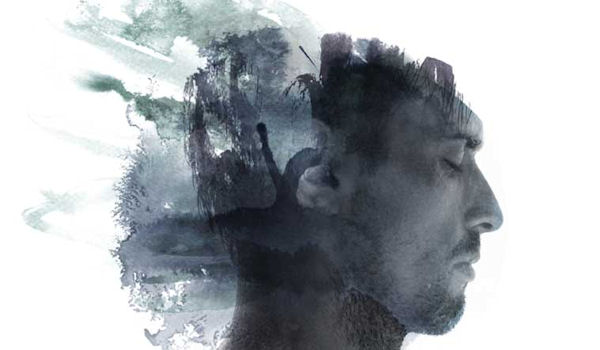
Caution and Conclusion
It would be unwise, however, to look down upon the spiritless with contempt. They are what they are, living their lives in accordance with their makeup. They should be handled no differently from how one handles a wild animal that acts according to its feral nature. It is only by trying to hold the spiritless up to higher spiritual standards that frustration sets in. Without expecting too much of them, and by understanding why they behave as they do, frustration gives way to calm insight.
Nor is it worth going out of your way to try and spot who is spiritless, because in ambiguous cases you will likely err on the side of paranoia. Since spiritless behaviors form a subset of the behaviors of spirited people, only the behaviors unique to spirited people can allow quick and certain identification, and then only of who is definitely spirited. Spotting only works for picking out who is truly spirited, which happens most easily with a spirited individual on your wavelength. You will sense the life in their eyes, the clear and unique energy behind their words, and the originality and independence behind their thought processes.
Notes:
[1] In case anyone wonders why we even need terms like spirit, soul, astral, and etheric, it is because these constitute the simplest model that explains large body of known observations, in accordance with Occam’s Razor. People who ridicule the necessity of such metaphysical distinctions and believe only in the body, or only in body and soul, are leaving out certain crucial observations, thus their over-simplistic model suffices for their smaller set of givens. However, the model must be expanded to include observations by clairvoyants, the astutely perceptive, and anyone who has experienced the paranormal. In doing so, the additional concepts of spirit, soul, astral, and etheric enter the picture. I believe these are the minimal components necessary to explain spiritless people. But it explains a lot more, just see Appendix III (below). These terms are also not just ad hoc explanations, however. Instead of just being theoretical, the etheric and astral bodies are directly experienceable through astral projection and viewable by clairvoyants.
[2] Amit Goswami explains with great insight how nondeterministic consciousness acquires deterministic traits through conditioning in the physical body, how quantum systems can acquire classical characteristics. See chapters 13 and 14 of his book The Self-Aware Universe.
[3] What does it mean that the ego imprints itself upon the etheric component of the soul? For one, it ties into a lot of what Rudolf Steiner wrote concerning the etheric double, the doppelganger, that mysterious shadow side of ourselves that is antagonistic toward our spiritual well-being. It also ties into Steiner mentioning that in Asia where ancestor worship is common, demonic entities can wear the cast-off etheric shells of deceased persons and thereby receive unto themselves all the psychic energy given to that identity during worship. Further, the ego continuing after death in etheric form may explain certain types of ghosts, as well as the problem of astral/etheric impostors in channeling whereby a negative entity can closely mimic a deceased relative. All these phenomena suggest that some portion of a person’s worldly identity (ego) survives death, and since it cannot be via the physical body, it must be the next closest thing: the etheric component of the soul. And lastly, when it comes to true artificial intelligence in quantum computers and cybernetic beings, it should be expected that these will be accompanied by an etheric field, just as plants have an etheric field, which would assist in the artificial intelligence having some level of “life” and not be just a deterministic machine with pseudo-random output.
[4] The term “second death” is Biblical. “He that overcometh shall not be hurt of the second death.” Revelation 2:11. “And death and hell were cast into the lake of fire. This is the second death. And whosoever was not found written in the book of life was cast into the lake of fire.” Revelation 20:14-15. Boris Mouravieff and the Cassiopaeans would have interpreted this approximately as follows: ‘overcometh’ means having developed spirit, ‘second death’ is the dissolution of the etheric and astral components of the soul, and ‘lake of fire’ represents the undifferentiated group soul into which the soul dissolves. What does a fire do other than melt and turn to ashes, removing all trace of former identifiability? Second death happens after the first death. If the first death is death of the physical, then the second has to be death of the nonphysical. I believe this interpretation because it makes sense.
[5] “Higher” means higher in function, not positionally higher on the body, so the throat chakra is not a higher chakra since it is associated merely with speech and intellectual functions. In the Fourth Way system it correlates with the “lower intellectual center”. It probably developed or evolved along with human capacity for speech and abstract thinking, something most animals lack. That is why spiritless humans have a throat chakra as well, and why they can be intellectually sharp and have no limits to their speaking abilities. So it’s one of the lower chakras in terms of function.
Appendix I: Common Questions
How do I know I’m not a spiritless person? – If you have experienced even one trait unique to spirit, then you are not spiritless. The very fact that you have wondered this, that you are uncertain and wish to know for sure, shows self-awareness and introspection, which is another trait of having spirit. Regardless, it is better to assume that you do have spirit and work on developing its qualities like intuition, empathy, and lucidity, all the while being aware of your lower egotistical impulses and keeping from acting on them.
I suspect that my (friend, spouse, parent) is a spiritless person, what do I do? – Set aside for a moment the question of whether they are spirited or not, and focus solely on whether you can continue being with them. Are they so manipulative, draining, abusive, or otherwise harmful to your well-being that you have to get away? If so, then it doesn’t matter whether they have spirit or not. Are they so friendly and easy going that you are doing quite fine having them in your life? If so, then it doesn’t matter whether they have spirit or not. So from a practical perspective, you only have to be concerned with whether you can deal with having them in your life. Where the distinction between spirited and spiritless does come into play is in dealing with psychopathic people, where even after promising to change they keep returning to their abusive ways; then at some point, instead of rationalizing that they are just misguided and need even more time and attention, it is better to conclude that maybe they are acting perfectly in line with who they really are. Naive people who think everyone is equally good inside will keep rationalizing and taking the abuse, but those with higher understanding will recognize the warning signs of futility sooner and save themselves the trouble.
How is this concept of spiritless people not somehow divisive, racist, persecutory, and antithetical to the idea of human equality, unity, harmony, and brotherhood? – If the theory is true, that some people do in fact lack spirit, then the truth of the matter should not be ignored for the sake of political correctness. When properly applied, knowledge can lead to greater stability and harmony in the long run. For example, every attempted utopian society has failed because it was founded on naive assumptions about the makeup of its citizenry; selfish, psychopathic, predatory individuals end up corrupting the utopia. If the utopia were founded on full understanding of such types, then measures could have been put into place to prevent corruption. Also, a theory should not be blamed for the consequences of its misapplication; those who misapply it use it as a vehicle for the satisfaction of their own egos rather than applying it from a spiritual perspective. Instead of throwing out the theory because of its misapplication, better effort should be made to prevent its misapplication. Lastly, the unity of all life can be recognized without sacrificing awareness of the functional diversity comprising it; and only by properly understanding each part of that unity can the whole be recognized in full clarity instead of mere ignorant bliss.
Appendix II: Correlating Sources
John Baines –
The Stellar Man
Rudolf Steiner –
Theosophy
Rudolf Steiner –
The Philosophy of Freedom
Rudolf Steiner –
Outline of Occult Science
G. I. Gurdjieff –
Views from the Real World
P. D. Ouspensky –
In Search of the Miraculous
Clement Salaman, et al. –
The Way of Hermes (Corpus Hermeticum)
Dion Fortune –
Psychic Self-Defense
Boris Mouravieff –
Gnosis, Volumes I-III
Laura Knight-Jadczyk, et al. –
The Cassiopaean Transcripts
Amit Goswami –
The Self-Aware Universe
For excerpts from some of these sources, see this PDF.
Appendix III: Permutations of Metaphysical Components
To show the necessity of concepts like spirit, body, etheric, and astral, here is a list of how these components combine to form different kinds of entities. As you will see, the difference between these entities cannot be explained with fewer than those components.
Elementary matter:
body
Crystals and plants:
body | etheric
Average animals:
body | etheric | astral
Spiritless humans:
body | ego | etheric | astral
Spirited humans:
body | ego | etheric | astral | spirit
Spirited humans after choosing to incarnate, first stage:
astral | spirit
Spirited humans after choosing to incarnate, second stage
etheric | astral | spirit
Spirited humans shortly before birth:
body | etheric | astral | spirit
Spirited humans after childhood:
body | ego | etheric | astral | spirit
Spirited humans after physical death:
ego | etheric | astral | spirit
Spirited humans after “second” death, during the afterlife:
spirit
Spiritless humans after formation of embryo:
body | etheric
Spiritless humans shortly before birth:
body | etheric | astral
Spiritless humans after childhood:
body | ego | etheric | astral
Spiritless humans after physical death:
ego | etheric | astral
Spiritless humans after “second” death:
(nothing)
Artificial Humanoids:
body | ego | etheric
Etheric thought-forms and astral wildlife:
etheric | astral
Angelic beings:
astral | spirit
Demonic beings:
ego | etheric | astral
Spirited astral projectors:
ego | astral | spirit
Etheric aliens and transcended humans:
etheric | astral | spirit
Fringe Knowledge for Beginners
In his groundbreaking book “Fringe Knowledge for Beginners”, Montalk offers the most important and practical concepts in the fewest number of pages, written to be understood by anyone with an open mind. Its goal is to provide an organized sequential overview of our “situation” regarding metaphysics, cosmology, human origins, aliens, the Control System, the Shift, and how to empower ourselves spiritually. It ends with a finely honed list of books for further study.
Continue at: http://wakeup-world.com/2015/11/21/spiritless-humans