How the Red Cross Raised Half a Billion Dollars for Haiti but only Built 6 Houses
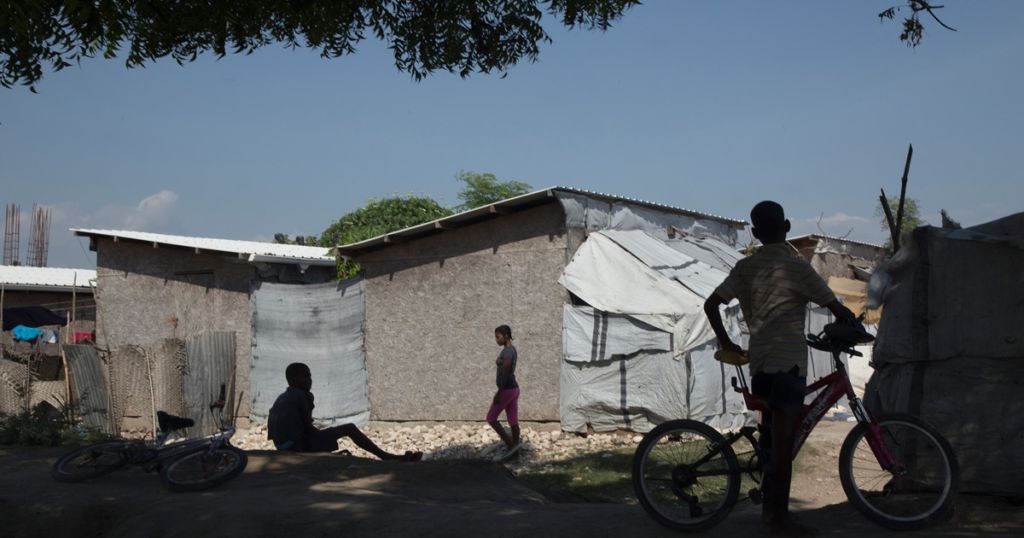
For those who are highly particular verging on suspicious about which charitable organizations you choose to give your money to, you could be onto something. 5 years after the devastating earthquake in Haiti and it appears that very little has been accomplished with the massive amount of donated money the American Red Cross collected during the disaster.
Haiti withstood a violent 7.0 magnitude earthquake that shook every part of Haitan life and continues to do so into the present. At the time of the earthquake, the Red Cross launched huge campaigns to pull on the heartstrings of Americans and donors and these campaigns were hugely successful, pulling in more than five hundred million dollars.
The Red Cross stated that these funds were to go into rebuilding and transforming the most damaged areas, yet the people of Campeche, who suffered some of the most disabling destruction, have yet to see much relief. Though the Red Cross expressed the intention to provide basic sanitation, shelter, and electricity to areas stricken by the earthquake, 5 years later and many are wondering how it could be possible that five hundred million dollars didn’t create more change than the reported 6 houses that have been built.
“Like many humanitarian organizations responding in Haiti, the American Red Cross met complications in relation to government coordination delays, disputes over land ownership, delays at Haitian customs, challenges finding qualified staff who were in short supply and high demand, and the cholera outbreak, among other challenges,” states www.propublica.org, an investigative journalism site which received the Pulitzer Prize
The above given factors, or some would say excuses, are totally rational and could certainly easily account for delays in aid being put into effect or alteration in the plans of how aid could be delivered, but 5 years and five hundred million dollars can’t be dusted under the rug due to some regulation complications or land ownership disputes. Propublica reports that as of June 2015, only 6 houses had been built in the stricken area, though there were claims of helping more than 130,000 people with accommodation and half of a billion dollars.
The president of Haiti spoke to these concerns by maintaining that thanks to the Red Cross, Haiti was clearly much better off and better prepared for future disasters. “Millions of Haitians are safer, healthier, more resilient, and better prepared for future disasters thanks to generous donations to the American Red Cross,” CEO Gail McGovern stated.
There has yet been no transparency or disclosure in the form of reports or documents that might clearly outline how exactly the monumental amount of money has been spent. Earlier in 2011 a report was sent out that described the Red Cross as being unprepared and unequipped with proper training to deal with certain issues faced in aiding Haiti such as the cholera outbreak.
“Lacking the expertise to mount its own projects, the Red Cross ended up giving much of the money to other groups to do the work. Those groups took out a piece of every dollar to cover overhead and management. Even on the
projects done by others, the Red Cross had its own significant expenses – in one case, adding up to a third of the project’s budget,” suggests Justin Elliott journalist for propublica and NPR Laura Sullivan.
The Red Cross has been called out for questionable practices in their supposed ‘aid’ projects in the past. When Hurricane Sandy devastated the east coast of the US and the Caribbean in 2012 the Red Cross was handling more than $250million in donations. Similar issues as we are seeing with Haiti arose in the aid response after hurricane Sandy. The statement issued by the Red Cross at the time stated that how funds were distributed was a ‘trade secret’ and that it couldn’t be revealed because “the American Red Cross would suffer competitive harm because its competitors would be able to mimic the American Red Cross’s business model for an increased competitive advantage.”
Propublica gave the Red Cross an opportunity to make a statement on the matter, an offer that was declined. As a result workers from propublica visited Campeche themselves to explore the situation at hand. What they found was a developing sense of resentment among the aid worker themselves. One aid worker, Jean Jean Flaubert who heads a community group that acts as a sounding board set up by the Red Cross shared, “What the Red Cross told us is that they are coming here to change Campeche. Totally change it,’ said Flaubert. ‘Now I do not understand the change that they are talking about. I think the Red Cross is working for themselves.”
The Red Cross did issue a statement on their website offering their own interpretation of the events, which can be read here. Questions remain unanswered. Decide for yourself.
Source(s):
ewao.com