20 states at solar grid parity
As installation costs continue to decline and retail electricity rates climb, residential solar economics have become increasingly more attractive across the United States.
 |
|
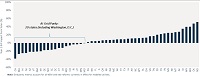
Today's Residential Solar Economics. Click on image to enlarge. Credit: GTM Research U.S. Residential Solar Economic Outlook |
In fact, according to GTM Research, 20 U.S. states are currently at grid parity, and 42 states are expected to reach that milestone by 2020 under business-as-usual conditions.
Residential solar reaches grid parity when the levelized cost of solar energy falls below gross electricity bill savings in the first year of a solar PV system's life. While traditional grid parity analyses rely on average retail electricity rates to calculate customer savings, GTM Research used utility and state-specific rate design, system production and installation costs to more accurately gauge solar's attractiveness.
When accounting for current net metering rules, rate design and incentives, California, Massachusetts and Hawaii lead the nation in residential solar attractiveness; in each state, solar can reduce an average customer's electricity bill by 20 to 40 percent during the first year of system life.
North Dakota, Oklahoma and Washington are the least attractive states for solar today, GTM found.
While 20 states are currently at grid parity, rate design and reforms to net metering can complicate the residential solar economic outlook in ways that can both strengthen and weaken rooftop solar savings.
"To date, the residential solar market's growth has primarily come from a handful of states where favorable rate structures and net metering rules have set high, predictable ceilings on savings due to solar," said Cory Honeyman, senior GTM Research analyst and lead author of the report. "But with more and more utilities reevaluating net metering rules and rate design, the residential solar economic outlook can no longer depend on a static policy landscape that fueled the nearly 1 million homeowners now with rooftop solar. Looking ahead, it is no longer a question of if, but rather, when and to what extent, rate structures and net metering rules are revised."
If each state's largest utility were to add a $50 monthly fixed charge for rooftop solar customers, just two states would remain at grid parity in 2016, according to GTM Research.
For more:
- see this
article
© 2016 FierceMarkets, a division of Questex, LLC. All rights reserved.
http://www.smartgridnews.com/story/business-usual-20-states-solar-grid-parity/2016-02-16