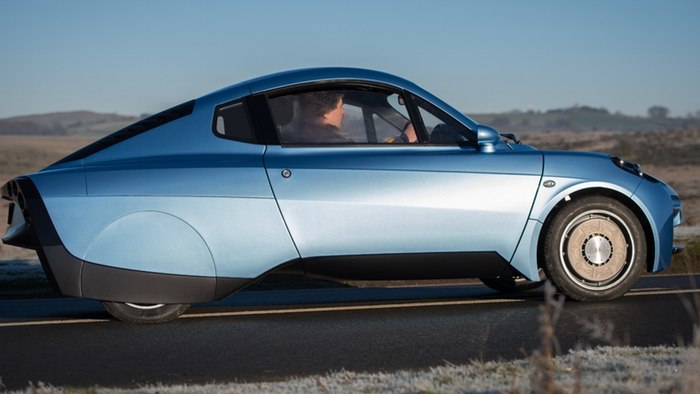
A new hydrogen fuel-cell electric vehicle prototype has been launched with a claimed fuel economy equivalent to 250 mpg (0.9 L/100km). Dubbed "Rasa," the new car has a lightweight carbon-fiber monocoque shell, in-wheel electric motors, a bank of supercapacitors charged by braking-regeneration, and a host of other features that enable it to travel up to a claimed 300 miles (483 km) on just a 3.3 lb (1.5 kg) tank of hydrogen.
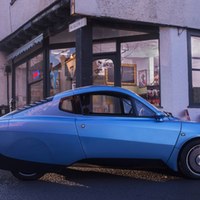
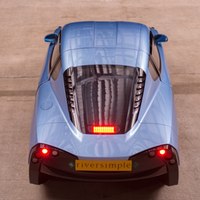
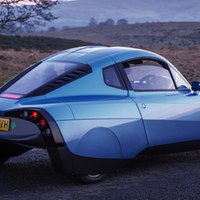
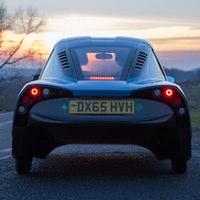
A road-legal two-seater engineering prototype, the Rasa by Riversimple Movement Ltd UK has been designed from scratch to meet the company's brief of lightness, strength, affordability and safety, as well the maximization of fuel economy and minimization of pollution. Given that the pollution emitted by the Rasa is just 40 gCO2/km "well-to-wheel", even if the hydrogen is sourced from natural gas, and that water is the only substance to come out of the tailpipe, the company is claiming the lowest carbon emissions for any vehicle thus far produced.
Being built for full European type approval, the development of the Rasa was supported by a £2 million (US$2.85 million) grant from the Welsh government. Beginning this year, using matched funding from a €2 million (US$2.22 million) European Union endowment, the company will be running a public 12-month trial of a fleet of 20 Rasa prototypes. It is expected that the outcome of this on-going development will result in the launch of a full production model to market sometime in 2018.
"The Rasa engineering prototype marks another key milestone in bringing an affordable and highly-efficient hydrogen powered car to market," said Hugo Spowers, Founder of Riversimple Movement Ltd. "We really have started from a clean sheet of paper."
With headquarters in Llandrindod Wells in Wales, and a design studio in Barcelona, Spain, Riversimple was born of the SWARM (Small 4-Wheel fuel cell passenger vehicle Applications in Regional and Municipal transport) consortium project that aims to build on and expand existing hydrogen refueling infrastructure across Europe, and collaborates to produce vehicles specifically designed to use these hydrogen stations.
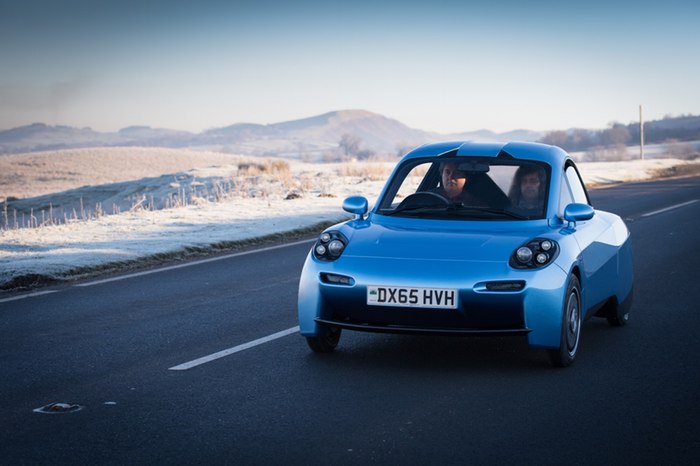
Taking the shape of a relatively low-slung two-seat hatchback, the Rasa has an interesting exterior design, with faired rear wheels, a cluster of projection headlamps up front, a vented hatch at the rear, and upward-swinging gull-wing doors. The interior appears to be a rather uncluttered affair, and provides a pod-style instrument binnacle, a simple dash layout, and a minimalist, but attractive finish. On the performance side, the company says that the car will be "light to handle, responsive, and fun to drive" with acceleration to 55 mph (89 km/h) in around nine seconds and a maximum speed topping out at around 60 mph (96 km/h).
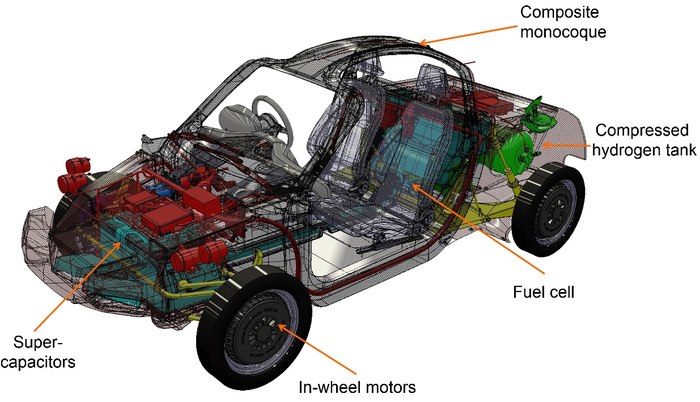
With a total kerb weight of just 580 kg (1,278 lb), and an 8.5 kW
(11.4 hp) fuel cell to power the motors contained in each of the
four wheels, the Rasa also recovers more than 50 percent of the
kinetic energy produced under braking and stores this in a bank of
super-capacitors which it then uses to boost acceleration. Not quite
in the performance league of such promised hydrogen fuel cell
vehicles as the
Audi h-tron or the
Honda Clarity, the exceptionally light weight of the Rasa and
its resulting handling characteristics, however, should still make
it a fun little car to drive around town.
Styled by Chris Reitz (a relative of Wolfgang Porsche and former
design director at Alfa Romeo), the company claims that the Rasa has
been designed and built with input from a highly-skilled in-house
team whose experience ranges from Formula 1 to aerospace
engineering.
All going well, when the vehicle is finally offered for sale at some stage in 2018, the company intends to offer the Rasa through a "sale of service" scheme where, for a fixed monthly fee and distance allowance, the company will provide all repair, maintenance, insurance, and fuel costs. As a result, drivers will not own the car, but simply swap it for a new one or return it at the end of the use period. This approach, claims the company, will help reduce the financial burden of outright vehicle ownership for the average driver.
"The Rasa gives us the opportunity to introduce customers to a
more convenient concept of motoring, a lightness of ownership that
neither places a burden on the pockets of motorists or the
surrounding environment," says Spowers. "The car is simple, light
and fun in every respect."
The video below shows the "Alpha" road test of the vehicle, prior to its exterior panels being fitted.
Sources: Riversimple, SWARM