Bad News for Factory Farming
Story at-a-glance -
- Factory farming and confined animal feeding operations (CAFOs) have created a world-wide distribution of disease
- Chicken contaminated with salmonella is likely at higher rates than reported, as the testing method used may artificially reduce number of carcasses found with salmonella
- Regenerative agricultural strategies reduce damage to the land, improve production of produce and meat and develop healthy economics in local communities
By Dr. Mercola
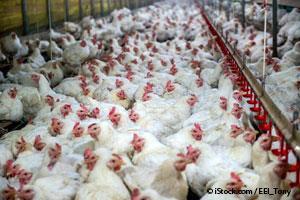
For the first time in over a century, more people are eating chicken rather than beef.1 Just like cows, chickens are most often raised in concentrated animal feeding operations (CAFOs), which are an inherently flawed industrialized animal farming methods.
Although auspiciously developed to streamline the production of more meat (raising the return on investment for large farming operations), CAFOs and factory farming have instead created a worldwide distribution of disease.
When you remove diversity from small farms and replace it with a focus on a single end product, the risk of operation increases, including the risk of disease.
Prior to CAFOs, if a virus or bacteria emerged among their herds, farmers may have lost a part of all of their herd, but the disease did not spread toanimals and countless other food products beyond their farms.
Additionally with CAFOs, the large-scale factory-type slaughterhouse magnifies the risk to the end user, as infection in a single animal can spread rapidly in confined conditions, and can contaminate large batches of meat during processing.
Your Food System Is Interconnected
The days of sourcing all your meat and produce from local farms have largely disappeared with the advent of large chain grocery stores.You can find farmers markets and organic farms selling produce and meat grown locally, but these products don't make it to your local store in the quantities that they should be.
Instead, larger grocers source many of their products from areas all over the world, and the ease and speed of global travel contributes to the spread of food-borne illnesses. In 2015, for example, a report from China highlighted the "breathtaking extent" of their soil pollution crisis.2
The report described how a pig farmer in a village buried 14,000 tons of chemical waste from a fertilizer manufacturer over a decade. According to the article, the villagers know about the toxic dump and don't eat anything grown there. Instead, the crops are shipped elsewhere.
Also, as I’ve mentioned many times in my reports, the overuse and misuse of antibiotics in factory farming and CAFOs promote the spread and overgrowth of bacteria, including antibiotic drug-resistant bacteria.
Chicken Contamination Rates May Be Higher Than Reported
The U.S. Department of Agriculture Food Safety and Inspection Service (USDA FSIS) oversees the safety of the nation's meat production. According to the agency's latest numbers, the rate of salmonella contamination has been falling,3,4 with a rate of 3.9 percent contamination in 2013, down from 7.2 percent in 2009.
But a new study by the USDA Agricultural Research Service (ARS) found the method used by the FSIS may artificially reduce the percentage of carcasses found with salmonella.5 This may occur if the germ-killing chemicals are not quickly neutralized by the testing liquid.
Chicken samples gathered at the end of production after having been cut into parts, as you would purchase in the grocery store, found an astonishing positive rate of 26.2 percent contamination with salmonella.6
This means consumers are likely exposed to far more salmonella-contaminated chicken than the published percentage from the FSIS. Unlike the FSIS test, reports of salmonella poisoning have not shown a decline pattern in the last 15 years.7 Not all reports are related to contaminated chicken though.
The Cost of Salmonella
In February 2016, the FSIS announced they would be doing a routine testing of chicken parts as described above, in an effort to reduce the percentage of contaminated chicken sold.8 The agency has set a maximum acceptable positive rate of 15.4 percent of chickens contaminated with salmonella.
In 2013, salmonella was the contaminant held responsible for 13,360 illnesses, 1,062 hospitalizations, 16 deaths and 14 food recalls.9 Outbreaks increased 39 percent between 2012 and 2013. Salmonella is ranked No. 1 for the most outbreak-related illnesses and deaths in 2013.
Data gathered by the CDC showed chicken, pork and seeded vegetables had the highest rate of salmonella contamination.10 The USDA estimates $3.7 billion are spent annually on medical costs for individuals poisoned with salmonella.11
Salmonella tops the ranking for the 15 most expensive foodborne illnesses.12 These top 15 foodborne pathogens are responsible for 95 percent of the illnesses and deaths related to food in the U.S.
The Economic Research Service (ERS) of the USDA estimates foodborne illnesses are responsible for $15.6 billion in medical costs, lost work and other expenses each year.13
Antibiotics Used on Livestock Not as Effective as Producers Think
Bacterial infections may spread easily in the confined small spaces of a CAFO. To protect from large losses and increase weight gain, many producers include antibiotics in their livestock feed.
Such overuse is a recipe for the development of antibiotic-resistant bacteria, which can further spread to humans through handling and/or eating contaminated meat.14
Contamination from factory farm manure may also spread to produce when manure is used as fertilizer. Exhaust fans on pig and poultry operations may even blow Methicillin-resistant Staphylococcus aureus (MRSA) superbugs into the surrounding environment.
Researchers in the Netherlands found living in an area with an industrial pig production increases your risk of contracting MRSA.15 Similar findings have been made among populations living close to crop fields where swine manure was used for fertilizer, and in proximity to CAFOs.16
In a five-year update to their landmark study, the Pew Commission on Industrial Farm Animal Production (PCIFAP), a nonpartisan fact tank17 looked at current agricultural practices and found "the present system of producing food animals in the United States presents an unacceptable level of risk to public health."18,19
Sadly, antibiotics may not be saving swine producers as much as they are costing. The net bottom line benefit from the use of antibiotic feed additives may only be around 25 cents per animal. This equates to approximately another penny per pound of meat at the grocery store.20,21
Antibiotics and Toxic Pesticides Big Contributors to Foodborne Illness
Antibiotic and pesticide production is big business. Over the past few decades, five companies have garnered 62 percent of the seed business. These companies, Monsanto, Bayer, DuPont, The Dow Chemical Company and Syngenta, all use genetically engineered seeds.
The reduction in diversity in the seed population, in combination with seeds modified to resist damage from glyphosate (Roundup) has resulted in plants that don't adapt well to different geographical climates and weeds that have become resistant to glyphosate sprayed throughout the growing season.22
The industry's response has simply been to engineer seeds resistant to more herbicides.23 The situation is poised to become increasingly dire if the German pharmaceutical and chemical company Bayer, which offered $62 billion dollars in May to acquire Monsanto, is successful in its bid.24
If Monsanto does sell out, it would make Bayer AG the world’s biggest seller of seeds and farm chemicals. Talk about a monopoly!
Bayer has developed seeds coated with neonicotinoids, also known as "neonics," to produce plants resistant to insects. The marriage of seed and insecticide produces plants toxic to bees, contributing to the declining bee population and poisoning slugs and ground beetles, all necessary components of a balanced ecosystem.25
The merger of these two companies would produce a super-organization designed to develop and sell seeds resistant to insects and herbicides, when in reality the goal should be to reduce or eliminate the use of these toxic products altogether.
The production of plants resistant to herbicides and coated with insecticides, coupled with antibiotic-resistant, bacteria-contaminated fertilizer, leads to a dangerously unhealthy food supply. But don't expect our government to protect you, or the chemical technology industry to change its ways.
Changing the system will require individual action. By changing your shopping habits, you effectively vote for the food system you want. It's also important to demand clean food, raised in an organic and sustainable fashion and to let food producers who don't meet these criteria know why you won't buy their food.
How Regenerative Agriculture Makes a Difference
Ultimately, the long-term solution is regenerative agriculture and organic farming, which uses neither antibiotics for growth promotion in animals, nor pesticides on crops. Regenerative agricultural practices are among the best kept secrets to naturally sequester CO2 in the soil and return the land to a natural state, improving fertility and biodiversity.26
The key to regenerative farming is to not only do no harm to the land, but also improve the soil with use. This is a key to producing foods rich in nutrients and vitamins. Ultimately this leads to increased productivity on the farm, healthier communities and improved local economics.27
The health of communities begins with healthy soils, fully able to support the growth of nutrient-dense plant life. These plants are a food source for livestock and land on your table at dinner. The key is to use natural means of controlling weeds and pests, and of fertilizing the soil without destroying the land with toxic loads of pesticides.
The process is dynamic, including organic farming practices such as cover crops, no-till crop production, perennial crops, crop rotation and pasture cropping. These are just a few strategies used in regenerative farming to increase food production per square mile of land and the farmer's income, and improve the quality of the topsoil.28
Low biodiversity, pesticides and herbicides may actually cut farming production per square acre of land. In an effort to increase production, hundreds of acres of rolling grassland in North Dakota have been burned, plowed and planted since 2011.29,30 In six short years, North Dakota lost half of the acreage protected under the Conservation Reserve Program. (CRP)
The ecological cost of planting genetically engineered corn and soy beans includes the loss of an ecosystem that supported more than 100 plant species and habitat for many grassland birds. Regenerative agricultural practices reduce the damage to the land and the environment.
Where to Find Real Food
In the long term, regenerative and local agriculture is the answer to food safety issues. Although the process requires change for both the farmer and the consumer, it is the best and most logical solution, promising less damage and compromise of the land.
Dramatic differences may be experienced in food safety and land conservation by shifting to smaller farms to serve local communities. You can start today by purchasing fresh produce, pastured eggs, raw organic dairy and grass-fed meats from your local farm or farmers market.
According to Michael Pollan, a journalist who writes about agriculture and the environment, the total number of farmers in the U.S. has actually begun to rise for the first time since the USDA began keeping track, which is great news for all of us who value fresh, wholesome food. Most of these farmers are younger people, who have embraced the notion of growing real, healthy food. If you live in the U.S., the following organizations can help you locate farm-fresh foods:
|
EatWild.com provides lists of certified organic farmers known to produce safe, wholesome raw dairy products as well as grass-fed beef and other organic produce. Here you can also find information about local farmers markets, as well as local stores and restaurants that sell grass-fed products. |
|
Weston A. Price has local chapters in most states, and many of them are connected with buying clubs in which you can easily purchase organic foods, including grass-fed raw dairy products like milk and butter. |
|
The Grassfed Exchange has a listing of producers selling organic and grass-fed meats across the U.S. |
|
This website will help you find farmers markets, family farms and other sources of sustainably grown food in your area where you can buy produce, grass-fed meats and many other goodies. |
|
A national listing of farmers markets. |
|
Eat Well Guide: Wholesome Food from Healthy Animals The Eat Well Guide is a free online directory of sustainably raised meat, poultry, dairy and eggs from farms, stores, restaurants, inns and hotels, and online outlets in the United States and Canada. |
|
Community Involved in Sustaining Agriculture (CISA) CISA is dedicated to sustaining agriculture and promoting the products of small farms. |
|
The FoodRoutes "Find Good Food" map can help you connect with local farmers to find the freshest, tastiest food possible. On their interactive map, you can find a listing for local farmers, CSAs and markets near you. |
|
The Cornucopia Institute maintains web-based tools rating all certified organic brands of eggs, dairy products and other commodities, based on their ethical sourcing and authentic farming practices separating CAFO "organic" production from authentic organic practices. |
|
If you're still unsure of where to find raw milk, check out Raw-Milk-Facts.com and RealMilk.com. They can tell you what the status is for legality in your state, and provide a listing of raw dairy farms in your area. You can also find a slew of information about raw milk on their "facts about real raw milk" page. The Farm-to-Consumer Legal Defense Fund31 also provides a state-by-state review of raw milk laws.32 California residents can also find raw milk retailers using the store locator available at www.OrganicPastures.com.
|
http://articles.mercola.com/sites/articles/archive/2016/07/06/factory-farming-cafos-foodborne-illnesses.aspx