Monsanto Benefits Hand Over Fist From Tax Dollar Subsidies
Story at-a-glance
- Monsanto’s history as an American “war horse” began with its involvement in the Manhattan Project and the creation of the atomic bomb. During the Vietnam War, the company became a leading producer of Agent Orange
- These war contributions appear to have cemented a long-lasting and loyal relationship between the U.S. government and Monsanto that continues to this day, to the detriment of the American people
- In the U.S., Monsanto’s influence over government runs so deep we just became the first country in the world to UNLABEL GMOs. President Obama will soon sign a bill that nullifies Vermont’s GMO labeling law
By Dr. Mercola
In the video above, Funny or Die pokes fun at Monsanto's "feeding the world" message by highlighting some of the most obvious features of genetically engineered (GE) foods, such as the unnatural crossing of genetic material between plant and animal kingdoms, the use of toxic chemicals and Monsanto's ever-expanding monopoly.
"I own everything!" Mama Monsanto exclaims, and that's pretty close to the truth. Monsanto has gobbled up seed companies, chemical competitors and even research institutions investigating the impact of pesticides on bee die-offs.
Not to mention the influence the company wields over the U.S. government. It sure seems to "own" that too.
Why the US Government Refuses to Turn on Monsanto
Many have pondered how Monsanto managed to rise to such a powerful position with respect to its influence over the U.S. government, and I think journalist Abby Martin may have pin-pointed the source of this obnoxious loyalty in her recent video report, "America's Monster" (below).
In it, she details Monsanto's history as an American "war horse," which began with its involvement in the Manhattan Project and the creation of the atomic bomb. Monsanto's contributions to the U.S. war machine continued during the Vietnam War, when the company became a leading producer of Agent Orange.
These war contributions appear to have cemented a long-lasting and loyal relationship between the U.S. government and Monsanto that continues to this day, to the detriment of the American people.
Sixty-four other nations have been labeling genetically modified organisms (GMOs) for years. Here in the U.S., Monsanto's influence runs so deep, we just became the first country in the world to UNLABEL GMOs, as President Obama will soon sign a bill that nullifies Vermont's GMO labeling law, which just went into effect July 1.
Throughout its entire history, which began with the foundation of Monsanto Chemical Works in 1901, Monsanto has specialized in the production of toxic chemicals. Despite attempts to shed its destructive image, Monsanto has utterly failed to do so, for the simple fact that it never actually changed its basic modus operandi.
Nor did it actually change its direction from purveyor of toxins to a life-giving agricultural company. Its focus remains producing and selling toxins. It simply discovered it could sell more chemicals, and ensure ever-increasing profits, by producing GE seeds with herbicide-resistant properties.
Voluntary 'Smart Label' Preempts State and Consumer Rights
Earlier this month, Senate Agriculture Chairman Pat Roberts and ranking Democrat Debbie Stabenow announced they'd reached a deal1 to create a national labeling standard for GMOs using voluntary "Smart Labels" (so-called QR codes2) rather than clear labeling.
This despite the fact that polls show 88 percent of Americans have said they do NOT want to be forced into using a smartphone app to find this important information.
The bill, S. 2609, which amends the Agricultural Marketing Act of 1946 with a national bioengineered food disclosure standard,3,4 is now more or less a done deal. On July 14, the U.S. House passed the bill, 306 to 117, and President Obama has already indicated he will sign it.5
The legislation will supersede and nullify Vermont's GMO labeling requirement, which took effect mere weeks ago.
It will also bar any other state from enacting GMO labeling requirements that differ from the national standard, and delays the disclosure requirement another two years; three years for smaller food companies.
What's worse, the new legislation changes and significantly narrows the definition of bioengineering, as applied under this law only, such that the newest biotech methods are exempt from the disclosure standards.
As a result, most GE food products currently on the market will end up being excluded anyway.
With the passing of this bill, the U.S. "war horse" Monsanto won again. Your elected representatives sold you out to the highest bidder. Senator Jeff Merkley has even stated that the bill was "written by and for Monsanto." As reported by Sputnik International:6
"Markley explained that because of loopholes in the legislation, Monsanto-made products 'would not be covered by it, because the definition excludes them.'"
Monsanto Benefits From Farm and Biofuel Subsidies
I recently discussed how government-subsidized commodities such as corn, soy and wheat contribute to the obesity and disease epidemics in the U.S.7,8,9 The Western processed food diet is chockfull of refined added sugars and unhealthy vegetable oils, which are cheap as a result of farm subsidies.
However, as much as 65 percent of the 94.1 million acres of corn grown in the U.S. actually doesn't enter the food system at all.10 It's used to produce ethanol fuel.
In a 2009 speech, Secretary of the Navy Ray Mabus said that "energy reform is a strategic imperative,"11 calling for the deployment of "the Great Green Fleet ... composed of nuclear ships, surface combatants equipped with hybrid electric alternative power systems running biofuel and aircraft flying only [on] biofuels."
Mabus had put down 2016 as the deadline for this naval energy reform, but it didn't come to pass. As noted by Vice News:12
"[C]ongressional Republicans ... have blocked the Navy from spending more on a gallon of biofuel than it does on a gallon of regular diesel.
Since it costs more to turn seeds, weeds or beef trimmings into usable fuel than it does to extract fossil fuels from the ground and refine them, it's all but impossible for the fleet to use substantial amounts of biofuels with crude oil prices are as low as they currently are."
Part of the problem is the low production of biofuel, which drives up the price. According to a 2015 report13 by the World Resources Institute (WRI), in order to meet just 20 percent of the global energy demand by 2050, using plant-based biofuels, we would have to DOUBLE the global annual harvest of plant material "in all its forms."
This makes the "quest for bioenergy at a meaningful scale ... both unrealistic and unsustainable," according to the report. Despite such bleak prognoses, the Biodiesel Tax Incentive Reform and Extension Act of 201614 would provide a $1.00 subsidy for each gallon of biodiesel produced during the taxable year.
In short, not only are your tax dollars continuing the expansion of corn for the production of biofuel, which is "unrealistic and unsustainable" to begin with, government subsidies are also used to grow crops that are primary contributors to obesity and ill health — and both of these schemes end up benefiting Monsanto, since the vast majority of corn grown in the U.S. is genetically modified.
'The Dumbest Guys in the Room'
In an article titled, "GMO Industry: The Dumbest Guys in the Room,"15 columnist Kurt Cobb16 makes a number of strikingly accurate observations.
"I am now convinced the GMO industry has managed to hire the worst public relations strategists in human history. By supporting a deeply flawed GMO labeling bill in the U.S. Congress ... the industry is about to open a Pandora's Box of PR nightmares for years to come," he writes.
"The anti-GMO groups will likely put out lists of the worst labeling violators and lists of their products containing GMOs. And, of course, there will be lists based on those enigmatic QR codes. Perhaps those codes will become the equivalent of the skull and crossbones feared by one GMO executive.17"
Cobb likely predicts the future here, as I believe the QR code will become exactly that — the mark of products and brands that are trying to make a mint from deception by making it as difficult as possible for you to find out the truth about their ingredients. The QR code will become known as the Mark of Monsanto, and shoppers will be able to simply assume admission of guilt when they see it, without ever taking the time to rummage through entire websites filled with extraneous information and advertising.
Forbes contributor Nancy Fink Huehnergarth has made similar observations,18 noting that "Big Food may be shooting itself in the foot again," as the QR code will make it appear they have something to hide.
"Food/drink packaging already has an ingredient label and nutrition facts panel. How simple would it be to mandate that all food packaging add a few words or a universal symbol to communicate the inclusion of GMO ingredients?" she says.
Why Eat GMOs When They Have No Health Advantages?
Cobb makes another great point when he says:
"[T]he industry's business and public relations strategists are the same ones who made a colossal marketing error — while believing they had achieved a regulatory coup — when they steamrolled the U.S. Food and Drug Administration (FDA) into ruling that GMOs are 'substantially equivalent' to their non-GMO counterparts and therefore require no testing ...
The reason this strategy has turned out to be a colossal marketing error is that as the attacks on GMOs have mounted ... the industry finds itself unable to pivot and point to any advantages that GMO foods have for consumers over non-GMO foods ...
After all, GMO foods are said to be 'substantially equivalent.' That means that the industry cannot give consumers any reasons to prefer GMO foods over their non-GMO counterparts ... So far genetic engineering has focused on creating plants [that] produce insecticides internally — not a pleasant thought for those eating them — and which are immune to herbicides made by, you guessed it, the companies producing the GMO seeds."
Chemical Residues — A Major Reason to Avoid GMOs
Indeed, if GMOs are substantially equivalent to conventional crops in terms of nutritional value yet contain higher amounts of pesticides, why eat them? After all, the idea that pesticides are a boon to health is a tough sell.
As you may have noticed, with the exception of DDT, which was marketed as "good for you," pesticides do not have health claims. And arguments defending the presence of pesticides on food always focus on the notion that the amount present is low enough that it will not produce adverse effects.
However, health statistics tell a different story, and the reason why the "trace defense" doesn't hold water is because it's not just about minor traces of chemicals on certain foods items.
Unless you eat organic foods and use "organic everything," you're exposed to pesticides from most foods, plus the chemicals used in the processing, plus chemicals to add flavor, texture and preservation power, plus chemicals found in the packaging and in the cashier's receipt, plus the chemicals found in just about every product you put on your body every day, including the clothes you wear, and the furniture you sit on. There are even chemicals in the air you breathe and the water you drink.
We are barraged with toxins at every turn, and they all ADD UP. That is the problem. And, unfortunately, food appears to be a major source, so avoiding chemicals in your diet can go a long way toward preserving your health. With that in mind, herbicide-resistant and pesticide-producing food crops are an incredibly foolish idea that contributes absolutely nothing to the health and wellbeing of the global community.
US Right to Know Blows Lid Off Another Monsanto Scheme to Tarnish Organics
Since transparent GMO labeling is not going to happen in the U.S. anytime soon, your options become quite straight forward: Buy organic and/or locally-grown food you can verify being non-GMO. This has always been the best option; just not the least expensive or most convenient. Not surprisingly, in addition to defending the quality and safety of its GE products, Monsanto has also tried to cast doubt on organic ethics and value, in order to curb consumer preference for organics.
Emails obtained via Freedom of Information Act (FOIA) requests by U.S. Right to Know (USRTK) reveal Monsanto colluded with an organization of "independent" academics to mislead the public into thinking they were being duped by the organic industry. The Huffington Post recently ran an article19 revealing this story. It's well worth reading in its entirety.
USRTK is a nonprofit organization that pursues truth and transparency in the U.S. food system. In 2014, Academics Review, a nonprofit organization composed of "independent academic experts in agriculture and food sciences" issued a 30-page report claiming organic shoppers were over-paying for organics due to deceptive industry marketing practices.
The report, which was "endorsed by an international panel of independent agricultural science, food science, economic and legal experts from respected international institutions" gained traction in the trade press with headlines such as "Organics Exposed!" and "Organic Industry Booming by Deceiving Customers."
The press release announcing the report even hammers home the point of independence by stating that "Academics Review has no conflicts-of-interest associated with this publication, and all associated costs ... were paid for using our general funds without any specific donor influence or direction." Alas, emails obtained by USRTK tell a different story.
Academics Review — Just Another False Front Group for Monsanto
Monsanto not only helped raise funds for Academics Review, Monsanto executives also "collaborated on strategy and even discussed plans to hide industry funding," The Huffington Post writes, adding:
"Monsanto's motives in attacking the organic industry are obvious: Monsanto's seeds and chemicals are banned from use in organic farming, and a large part of Monsanto's messaging is that its products are superior to organics as tools to boost global food production."
One of the co-founders of Academics Review was Bruce Chassy, Ph.D., professor emeritus at the University of Illinois. In March of this year, an investigation by Chicago WBEZ news20 discovered Monsanto paid the now retired Chassy more than $57,000 over two years for travel, writing and speaking expenses, yet Chassy never disclosed his financial ties to the company on state and university conflict-of-interest disclosure forms.
Between 2005 and 2015, Monsanto gave at least $5.1 million to University of Illinois employees and programs — all of it undisclosed, as it was funneled via the University of Illinois Foundation, which is exempt from public scrutiny and disclosure.21
Chassy also lobbied federal officials on Monsanto's behalf to prevent further regulations on GMOs. Chassy claims he did this of his own volition, but emails22 show Monsanto's Eric Sachs urged Chassy to get involved. The correspondence also reveals this was in fact part of an industry lobbying effort, "with academics out in front," basically pretending to be acting independently — just like the Academics Review.
FOIA-recovered emails show Chassy was very eager to attack the organic industry but needed money. Jay Byrne, former head of communications at Monsanto, agreed to help, indicating he would discuss "options for taking the Academic Review project ... forward" by meeting with Val Giddings, former vice president of the biotech industry trade association BIO.
Eric Sachs, who handles Monsanto's public relations, also emailed Chassy discussing funding possibilities for Academics Review while "keeping Monsanto in the background." Unfortunately, mainstream media outlets are often tightly reined in by corporate bias, which prevents the truth to become as widely known as it should. As noted in The Huffington Post:
"Despite the revelations in emails and the disclosure of Chassy's financial ties to Monsanto, the Academics Review website and its report attacking the organic industry are still posted online with all the descriptions claiming independence. And Chassy still enjoys press coverage as an 'independent' expert on GMOs. In May 2016, two separate Associated Press stories quoted Chassy on that topic. Neither story mentioned Chassy's now-public financial ties to Monsanto."
SAD NEWS: House Passes DARK Act Compromise
The House passed a compromise to the DARK Act that will force food distributors to disclose the presence of genetically “engineered” (GE) ingredients with a smartphone scan code. It’s now headed to the White House, where President Obama is expected to sign it.
Genetically modified organisms (GMOs), or genetically “engineered” (GE) foods, are live organisms whose genetic components have been artificially manipulated in a laboratory setting through creating unstable combinations of plant, animal, bacteria and even viral genes that do not occur in nature or through traditional crossbreeding methods.
GMO proponents claim that genetic engineering is “safe and beneficial,” and that it advances the agricultural industry. They also say that GMOs help ensure the global food supply and sustainability. But is there any truth to these claims? I believe not. For years, I’ve stated the belief that GMOs pose one of the greatest threats to life on the planet. Genetic engineering is NOT the safe and beneficial technology that it is touted to be.
The FDA cleared the way for GE (Genetically Engineered) Atlantic salmon to be farmed for human consumption. Thanks to added language in the federal spending bill, the product will require special labeling so at least consumers will have the ability to identify the GE salmon in stores. However, it's imperative ALL GE foods be labeled clearly without a smartphone scan code because not everyone owns a smartphone.
The FDA is threatening the existence of our food supply. We have to start taking action now. I urge you to share this article with friends and family. If we act together, we can make a difference and put an end to the absurdity.
Boycott Smart Labels Today
When you see the QR code or so-called Smart Label on a food product, pass it by. Products bearing the Grocery Manufacturer’s Association’s (GMA) Smart Label mark are in all likelihood filled with pesticides and/or GMO ingredients.
The GMA’s 300-plus members include chemical technology companies, GE seed and food and beverage companies. Monsanto, Dow and Coca-Cola are just some of the heavy-hitters in this powerful industry group, which has showed no qualms about doing whatever it takes to protect the interest of its members.
Don’t waste your time searching through their website, which may or may not contain the information you’re looking for. If they insist on wasting your time and making your shopping difficult, why reward them with a purchase?
A little known fact is that the GMA actually owns the "Smart Label" trademark that Congress has accepted as a so-called “compromise” to on-package GMO labeling, and that’s another reason why I believe the Smart Label mark is the mark of those with something to hide such as Monsanto.
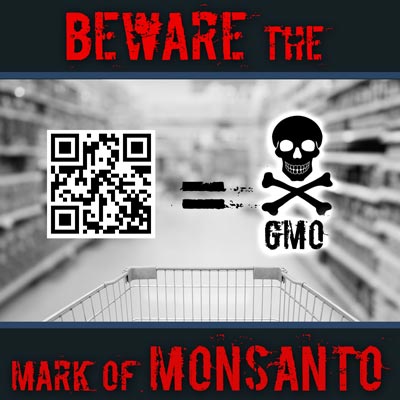
Will you financially support a corrupt, toxic and unsustainable food system, or a healthy, regenerative one? There are many options available besides big-brand processed foods that are part of the “GMA’s verified ring of deception.” You can:
- Shop at local farms and farmers markets
- Only buy products marked either “USDA 100 percent Organic” (which by law cannot contain GMOs), “100 percent Grass-Fed,” or “Non-GMO Verified”
- If you have a smartphone and you don’t mind using it, download the OCA’s Buycott app to quickly and easily identify the thousands of proprietary brands belonging to GMA members, so you can avoid them, as well as identify the names of ethical brands that deserve your patronage
Last but not least, encourage good companies to reject QR codes and to be transparent and clear with their labeling. This will eventually ensure that all GMO foods can easily be identified by the GMA’s “verified ring of deception” mark that is the Smart Label.
Campbell’s, Mars, Kellogg’s, ConAgra and General Mills all vowed to voluntarily comply with Vermont's GMO labeling law by labeling all of their foods sold across the U.S. Will their plans change if the current “compromise” gets passed by the Senate? That remains to be seen, but if you like these companies, I would encourage you to reach out to them and ask them to remain steadfast in their promise.
Non-GMO Food Resources by Country
If you are searching for non-GMO foods, here is a list of trusted sites you can visit.
- Organic Food Directory (Australia)
- Eat Wild (Canada)
- Organic Explorer (New Zealand)
- Eat Well Guide (United States and Canada)
- Farm Match (United States)
- Local Harvest (United States)
- Weston A. Price Foundation (United States)
© Copyright 1997-2016 Dr. Joseph Mercola. All Rights Reserved.
http://articles.mercola.com/sites/articles/archive/2016/07/26/monsanto-gmo-subsidies.aspx