Sarah Winnemucca Devoted Her Life to Protecting Native Americans in the Face of an Expanding United States
The 19th-century visionary often found herself stuck between two cultures
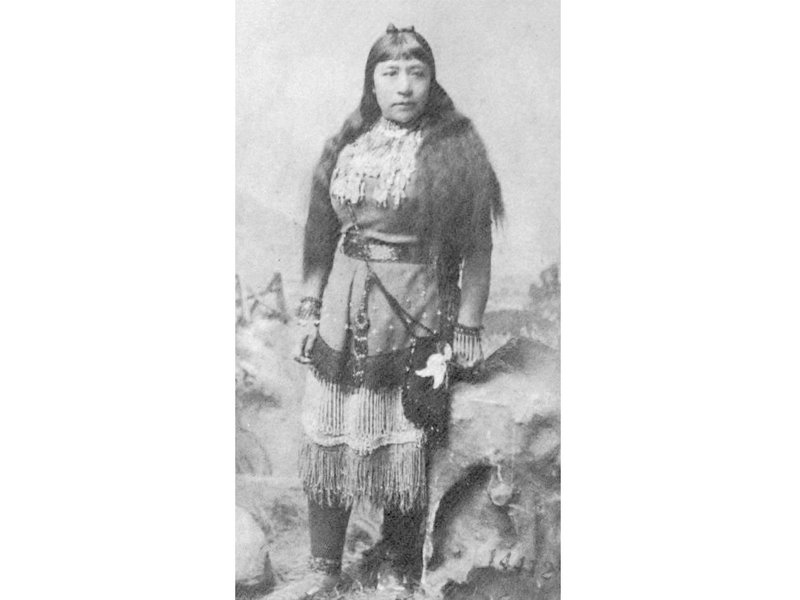
For the first few years of her life, Sarah Winnemucca, who was born around 1844, did not know that she was American. Born Thocmetony (Shell Flower) among the Numa (known among whites as the Northern Paiute or “digger” Indians), she roamed with her people over western Nevada and eastern Oregon, gathering plants and fish from local lakes. But even during her early years, Winnemucca had learned to be afraid of the men with “white” (blue) eyes, who looked like owls because of their beards.
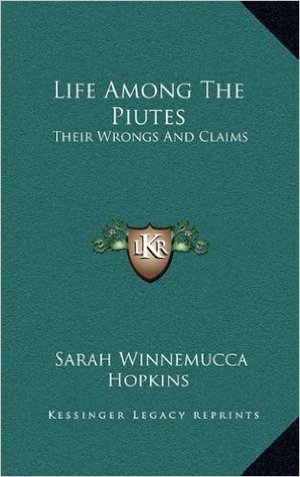
For Winnemucca, being “American” was a complicated process of adopting the behaviors and language of people she had reason to distrust. Translating between the two cultures became her life’s work. And though she was uncomfortable with the role, her influence is still felt today: Winnemucca’s autobiography, Life Among the Paiutes, the first English narrative by a Native American woman, voices a thoughtful critique of Anglo-American culture while recounting the fraught legacy of federal lands, including Nevada’s Pyramid Lake and Oregon’s Malheur region, recently the site of a militia takeover. (The 19th-century Malheur Indian reservation lies immediately north of the current wetlands).
As Winnemucca grew up, she came to understand that the settlers were not leaving and she began adopting Anglo-American habits, acquiring the Christian name Sarah and mastering English and Spanish. At her grandfather’s request, she and her sister went to a convent school in San Jose, California, but they were only there a few weeks when “complaints were made to the sisters by wealthy parents about Indians being in school with their children.”
For most of her life, she sought to straddle American and Native cultures to help the Northern Paiutes. In 1859, land was set aside near Pyramid Lake for a reservation. Winnemucca and her family were expected to abandon their nomadic life for a settled, “American” lifestyle—and make a success of farming in a dry, arid landscape without any training. Many Paiutes died of starvation at Pyramid Lake. They were only given supplies the first year, with government agents pocketing the money intended for them for the following 22 years (a practice common on many reservations).
After the first disastrous winter there, Winnemucca was driven to action, begging military leaders at Nevada’s Camp McDermit for help. Wagonloads of supplies were finally sent to the reservation. Winnemucca was hired as a military interpreter and her father and their band moved to the military camp.
Translating was a means for Winnemucca to get better treatment for her people, but she was often in an untenable position. In the mid 1870s, she had to translate for agent William V. Rinehart, whom she found to be a hard, unlikeable man. If she translated Rinehart’s words without comment, she failed to protect her people; but if she tried to convey grievances from the Northern Paiutes, she might be (and was) fired from her position. Rinehart eventually banned her from Malheur.
Winnemucca fared better in the military camps, where her knowledge of Paiute life garnered some respect. In 1878, she worked as a messenger, scout and interpreter for General O. O. Howard during the Bannock War, a skirmish between the U.S. military and the Bannock Indians. “This was the hardest work I ever did for the government in all my life … having been in the saddle night and day; distance, about two hundred and twenty-three miles. Yes, I went for the government when the officers could not get an Indian man or a white man to go for love or money. I, only an Indian woman, went and saved my father and his people,” she later wrote. Her courageous actions landed her on the front page of The New York Times in June 1878, but sowed mistrust between her and local tribes.
Read more: http://www.smithsonianmag.com/history/sarah-winnemucca-devoted-life-protecting-lives-native-americans-face-expanding-united-states-180959930/#jQiH6PXY5YH9FOjs.99
Give the gift of Smithsonian magazine for only $12! http://bit.ly/1cGUiGv
Follow us: @SmithsonianMag on Twitter